Richard Keating

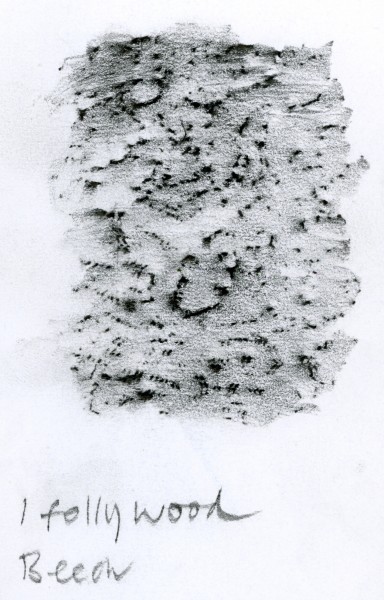
  • Folly Wood, Vision 21

    Walk with Alison Parfitt discussing, amongst other things, her involvement with re-wilding initiatives. To me the issues remains to rewild our psyche.
    Planning meeting with Andy Freedman and Seb Buckton to prepare for the Summer Solstice gathering.

  • Tutorial

    Tutorial with Doctor Robert Newell and Professor Andrea Liggins.

    During the journey I was very aware of speed, passing through places in hours that it had taken me days to walk through the week before. The trees were out of reach, a blur rather than a world in which to slow down and become engrossed. A feeling of unraveling. A feeling I often get when driving over a route I’ve recently walked. Unraveling and somehow disrespectful. I’m not clear if its disrespectful of the place or the effort it has taken to walk.
    Which ever it is, I seem to value the walking experience of place – whether I feel that the effort makes the experience more worthwhile or whether the value is increased because of the closer contact with what the place has to offer at a walking pace, I don’t know. Theoretically, I could value the car and train journeys as much as I do the walks; I could consider the preciousness of the fossil fuels being used for example and enhance my experience by being grateful, even bringing a feeling of pathos to the experience. This doesn’t seem to be a substitute for actual close contact with place. It seems as if this “knowing” is less immediate than the “sensation of place”.

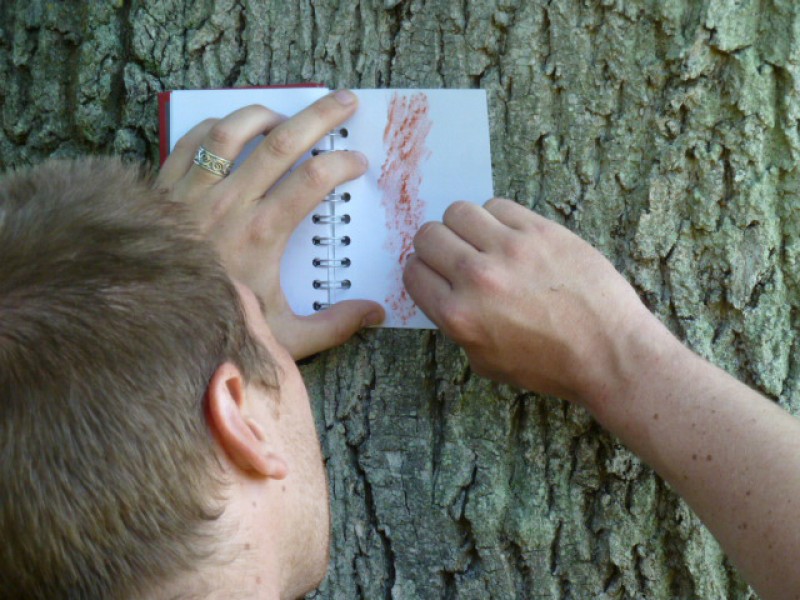
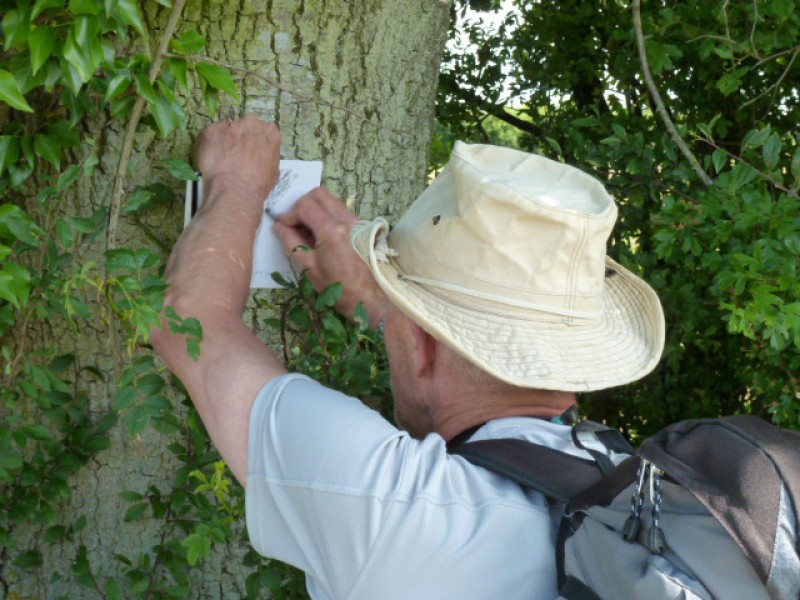
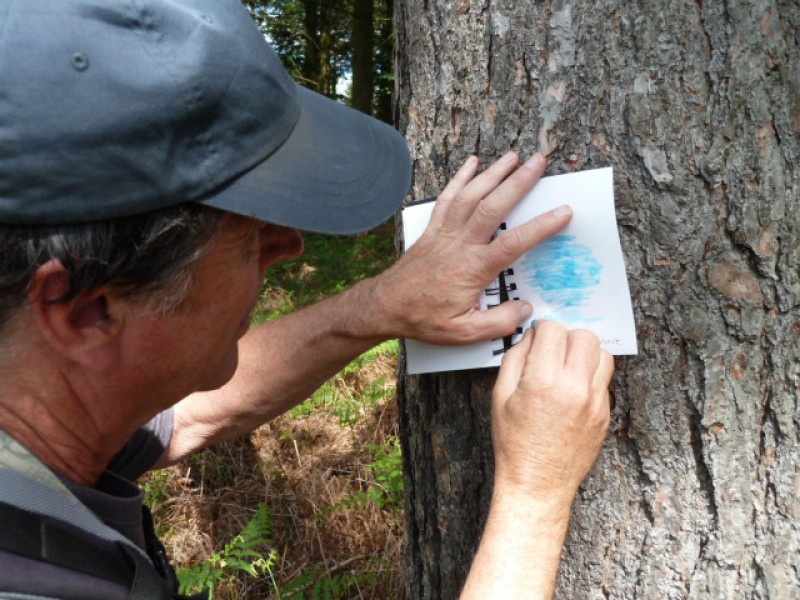
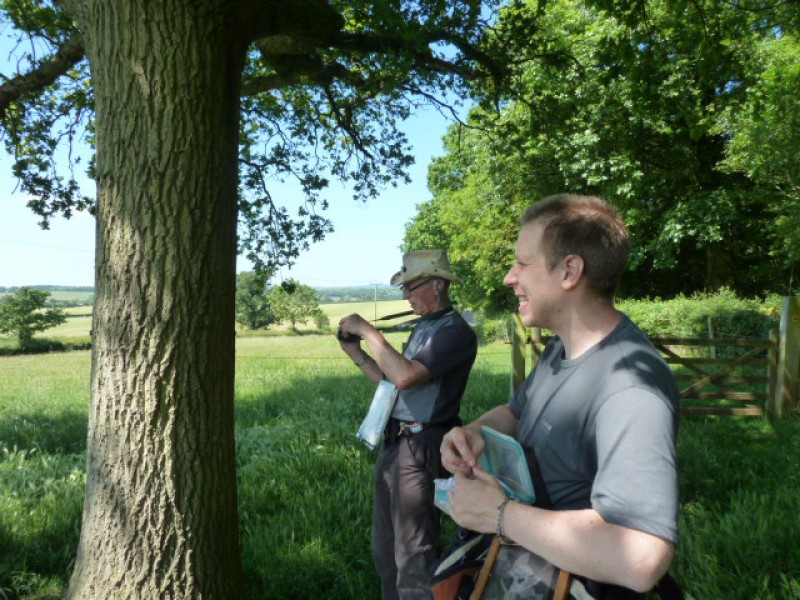
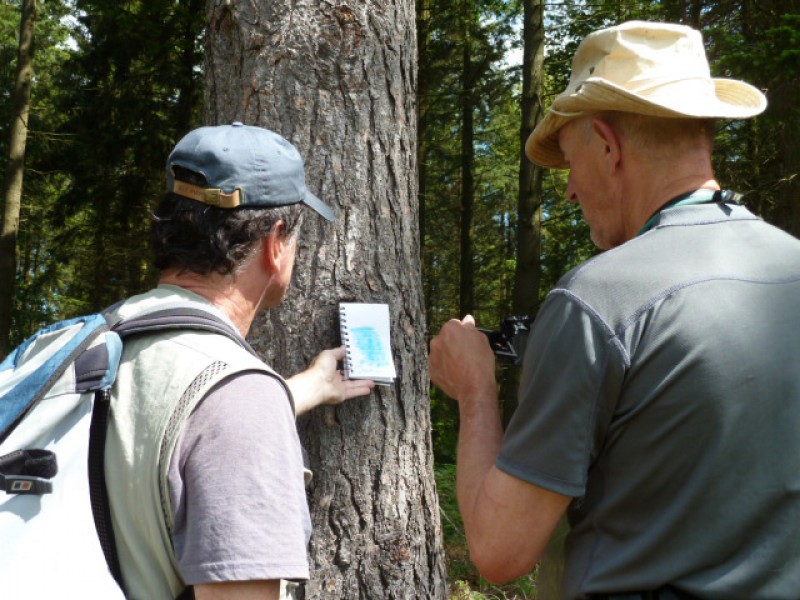
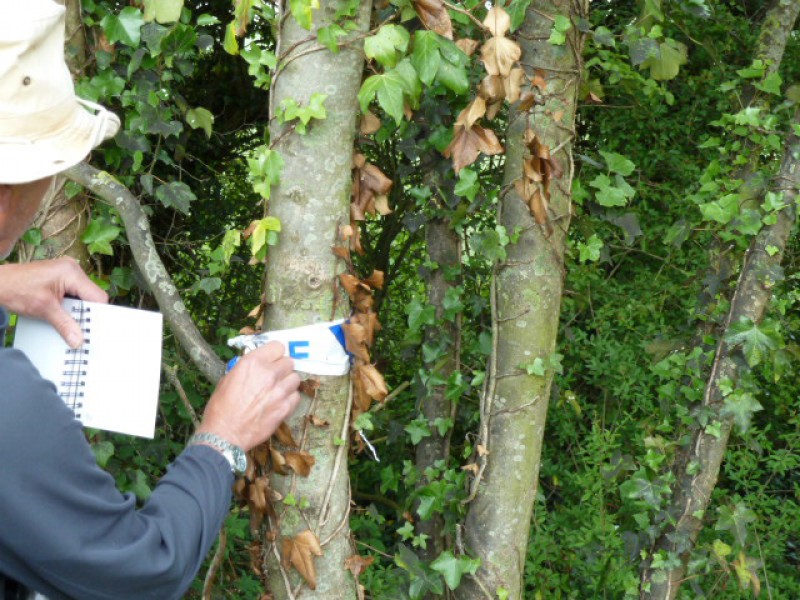
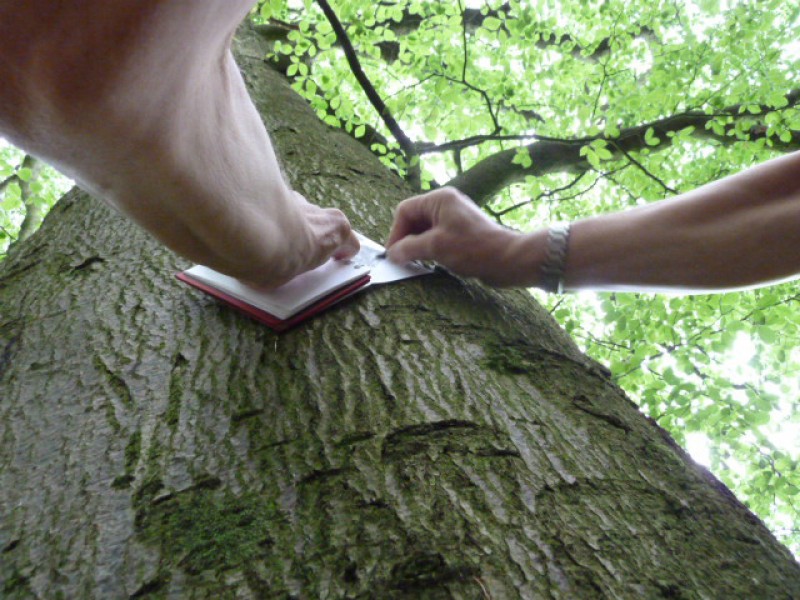
    This chain of thought coincided with the discussion in the tutorial about the nature of photographs; whether they are of a place or about a place. For me this also includes thinking about the relationship between photographs, drawings, video and sound, especially as all are combined within the animations. On the woodland pilgrimage, the photographs I took, or in some cases asked Tom or Kel to take, were of the activity of drawing/tree rubbing. Some that I took were also a record of how it felt to be doing it. In terms of slowing down and sensing place, photography and drawing can share the aspect of stopping and looking. Both can also be a record of a fleeting moment, not seen but nevertheless recorded.
    Digital photography is really the development that enables photographs to be so much “quicker” than drawing. Previously drawing was instant whereas the photographic process was slower.
    Useful discussion about applied art and artistic intention. How to balance the purpose of the work with the artistic intention? I feel that the role of aesthetics in participatory art is what distinguishes art from other participative, cultural situations and events. Its as if the artist “brings” this aesthetic consideration to the situation, or maybe more accurately, holds responsibility for incorporating the aesthetic in life. As with much of our “silo-like” organisational structure, art has been placed in its own silo. Which is tricky because aesthetics are often thought of as secondary to aspects of life such as finances and technology and the art silo has increased this separation between people and aesthetics and in some cases has itself suppressed the appreciation of beauty and nature.
    One of the aims of my work is to try to develop an exemplar of how this aesthetic appreciation of place can be integrated with other values.
    It seems to me that it all comes back to really knowing as well as knowing conceptually.

  • WtL exhibition, Folly Wood, Woodland Pilgrimage, The Weave, Stroud Nature

    5th to 7th June, Catching up with emails, downloading images from pilgrimage, getting used to not being outside all day.

  • Woodland Pilgrimage 29th May to 4th June with Tom Keating and Kel Portman

    Day 6. Edge to Folly Wood.
    We spend an hour or two strolling to Folly Wood to complete our circle of 112 miles and 105 tree rubbings. We made it, I could walk the distances and suddenly its over.

  • Woodland Pilgrimage 29th May to 4th June with Tom Keating and Kel Portman

    Day 6. Longhope to home.
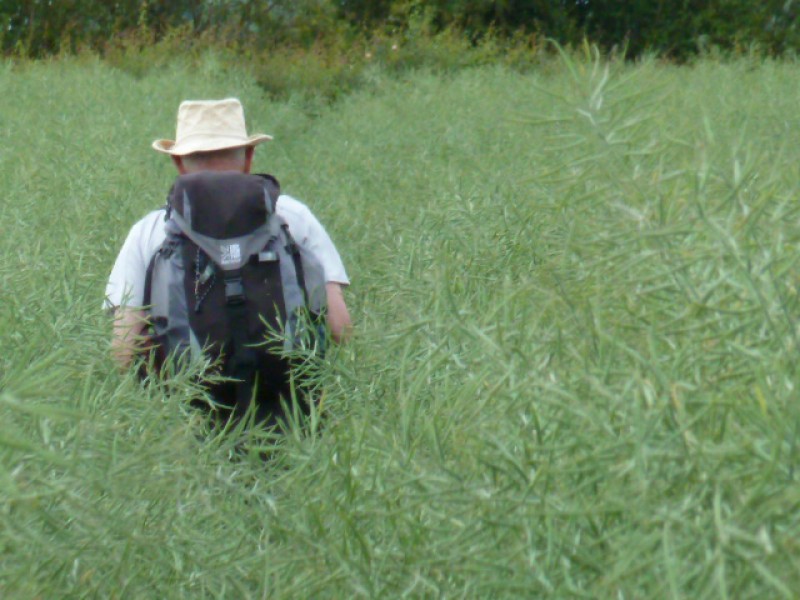
    Our walk today feels like drawing a section through a map of Gloucestershire. We climb May Hill and see the River Severn almost everywhere, turning,twisting and glistening – and in the distance the Bridge or is it our memory? We walk out of and down from the Forest of Dean and its red soiled hills. We see the Vale of Gloucester that stretches ahead, we feel the morning heat beginning to rise from it. We cross unmarked fields, following lines of trees where we guess the path used to follow a hedgerow, pushing, swishing through the crop, both annoyed and sorry. We nervously cross railway tracks, appreciative of the high quality stiles and signage. We walk the Severn flood embankments wondering about the houses below. We cross back across the Severn again on Telford’s original bridge and enter Gloucester’s green space below the grey road system thundering above. We rub tree 100.

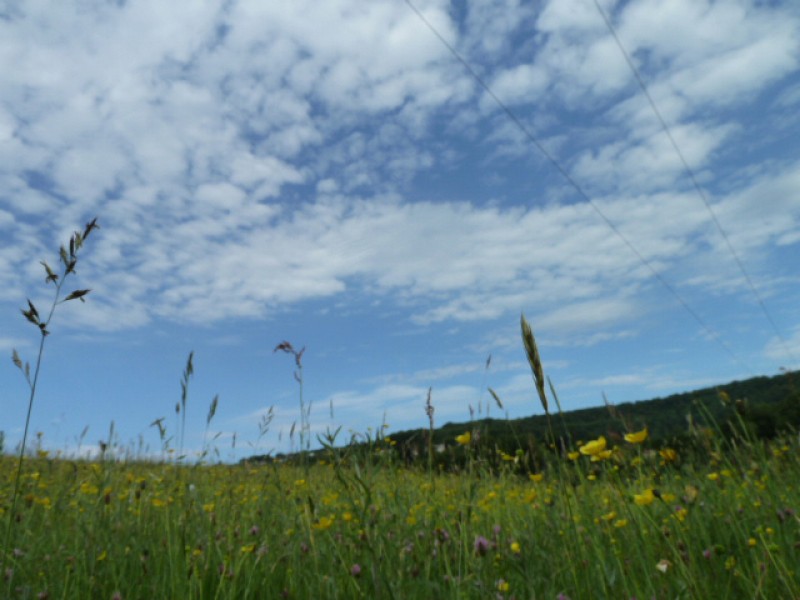
    Gloucester has its own diversity, maybe not as biodiverse as the landscape we’ve crossed but ethnically more diverse. We complete our crossing of the vale and climb back into the Cotswold Hills, swapping the colour and hot tarmac of Gloucester for hot, colourful and insect filled meadows on the Cotswold Edge. We reach Edge and stop.

  • Woodland Pilgrimage 29th May to 4th June with Tom Keating and Kel Portman

    Day 5. Parkend to Longhope.
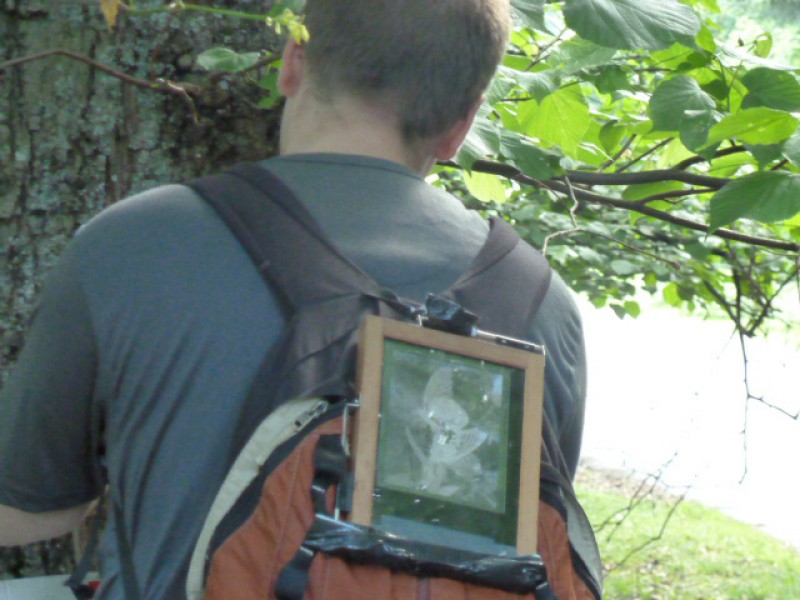
    A day in the Forest. Tree rubbing talks of trees for timber. Tom carries a developing photographic negative on his back, using sunshine and a solution made from flowers picked during the walk to develop it into a print – photosynthesis.

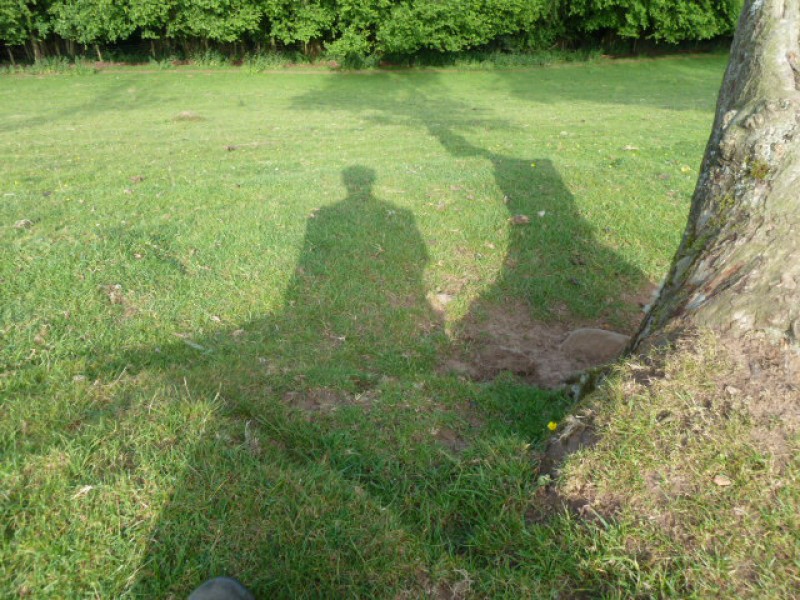
    Towards the end of the day we take the wrong route and add a couple of steep miles to our journey, ending up on the wrong side of a hill. Shadow drawing of the hill feels like a similar response to rubbing trees. Throughout the walk we talk a lot about the signage being inadequate in many instances, not really executed with the user in mind, more as a legal minimum. We talk about being lost and finding our way and the similarities with the creative process – just when do we retrace our footsteps as opposed to remaining outside of our comfort zone? We have developed a good process with regard to our walking, especially where maps and signage have been lacking. But we are not adverse to be lost as another word for it is exploring.

  • Woodland Pilgrimage 29th May to 4th June with Tom Keating and Kel Portman

    Day 4. Elberton to Parkend
    After yesterdays walk of getting on for 25 miles, much on roads, including walking to the pub in the evening, I find the walking hard but have developed the ability to “get into the zone”. So my approach to coping with the pace has developed from day one and I am aware of “being”, but at times slightly apart from my surroundings.

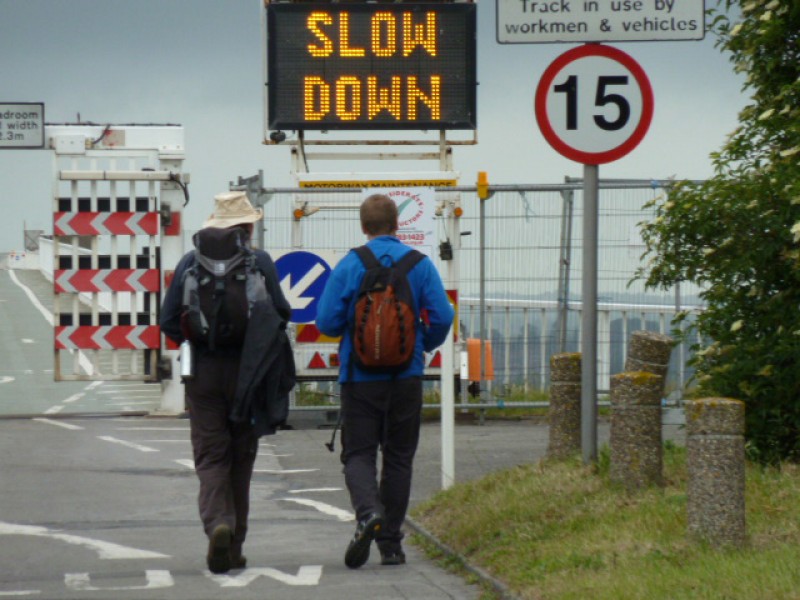
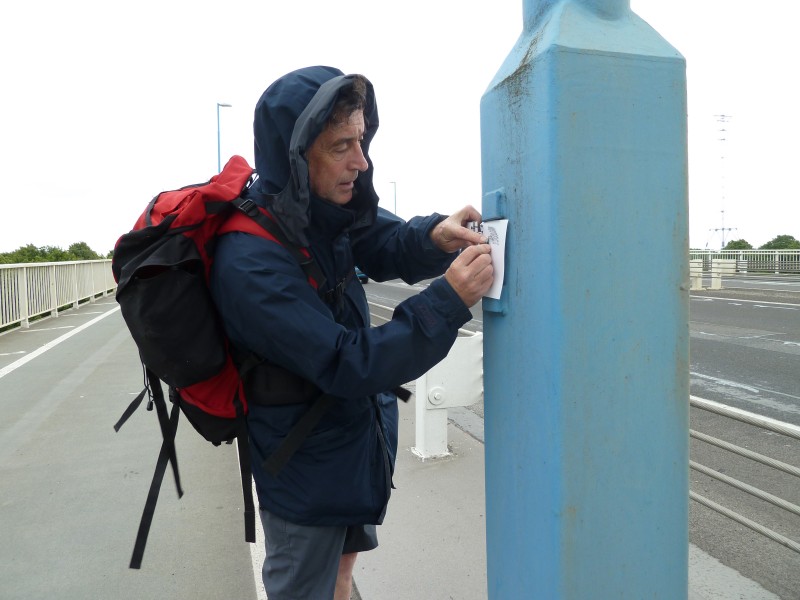
    The bridge crossing is fantastic and is a project in itself. We are already planning to revisit. In some ways it is the most elemental, even sublime of the places we have walked despite being built. I certainly would consider climbing almost any tree we rubbed over climbing this structure despite the foot and hand holds.

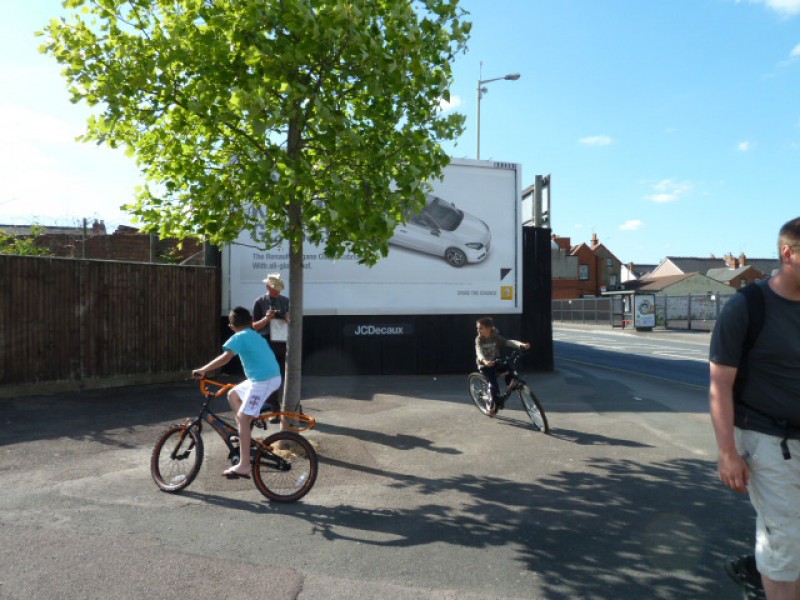
    We walk through Chepstow and, until we reach the centre, only meet a dozen or so people on foot – most of these waiting for a bus into town. We are passed by hundreds of cars just during this short walk through the residential areas. How far are people driving I wonder. How many could walk instead if only time was on their side? If only they had allowed time. I know that more people drive to work or the shops than walk to them, but by walking into the town as a part of our 22 mile walk today, I really know it, really feel it.

    Leaving Chepstow we cross the River Wye and climb into the Forest of Dean and the contrast with the mornings walk across the bridge is immense – I am at once aware of being in a different sort of place, one where forestry dominates, where the pace is so different from the road bridge, where settlements are set in woodlands rather than trees planted in town.
  • Woodland Pilgrimage 29th May to 4th June with Tom Keating and Kel Portman

    Day 3.
    Little Sodbury to Elberton.
    We discovered that Yate has been built over our route and so we spent too long walking on roads. We also had to cross a golf course – strangely over domestic and manicured yet slightly dangerous. We also had to cross too many fields that were unmarked or in which no attempt had been made to provide a footpath.Thankyou to the farmers and landowners who do mark these routes.

    But it was the road walking that made me realise the importance of (well signed) footpaths and the like. I felt as if we were dicing with death on some of these roads and where else can we walk sometimes? Of course I know that roads are dangerous but walking them really made me know, I know that walking over twenty miles a day is hard, but doing it really made me know. This way of knowing and doing relates to my practice led PhD. It also relates to Pragmatism which is a philosophy based on learning by comparing theory with practice.

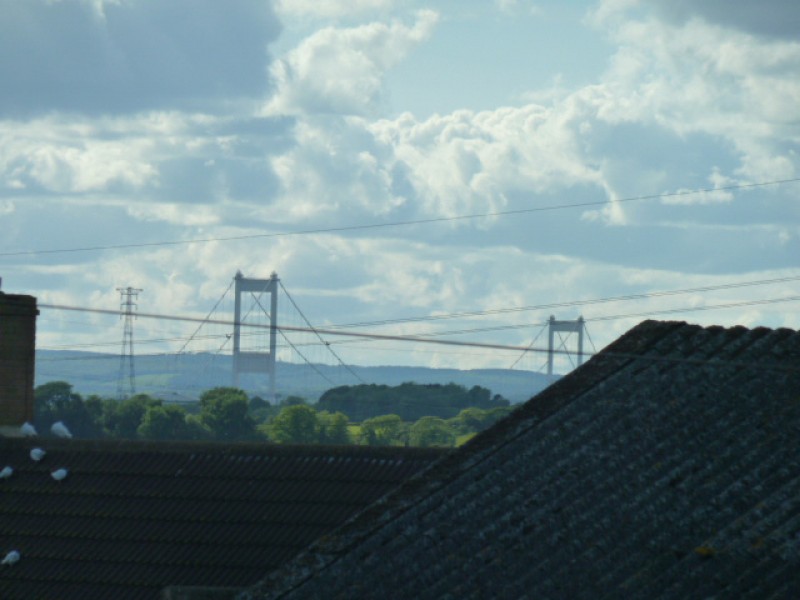
    A footnote to this day and the following one were the glimpses we would get of the Severn Bridge, today in anticipation, tomorrow as a reminder of where we had been. Walking the Land work a lot with the River Severn and this crossing was important to us all.

  • Woodland Pilgrimage 29th May to 4th June with Tom Keating and Kel Portman

    Day 2. Tetbury to Little Sodbury.
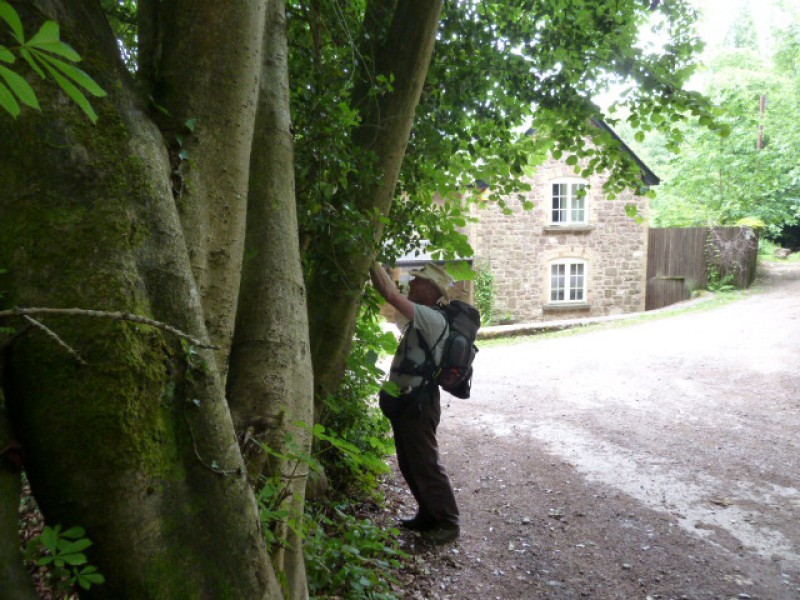
    Each rubbing caries a story. Rubbing of a Highgrove Yew hanging over the wall talks of shared values despite class, privilege, power and responsibility. We revist and collectively rub Dawn Redwood, Metasequoia glyptostroboides remembering our “Aboreality” project here at Westonbirt Arboretum about endangered trees and the follow-up digital exchange with Jian Lu in Shanghai. We rub dead trees, tree rings, timber trees and telegraph poles thinking of other values of trees and the temporariness of these huge, woody plants.

    We get lost in the rain at one point and stray too far into Wiltshire – at this point the regular tree rubbing is comforting and gives us back some control over our predicament.

    A foot note to the day is that in our B&B overlooking the Little Sodbury Hill Fort, we watch “Spring Watch” on TV only to turn off the invasive chatter and instead, on looking out of the window next to the TV see a Hare sitting on the outer bank of the Hill Fort, silhouetted against the darkening sky. As happens a lot on this walk, the sense of what is real is to me is heightened.

    In terms of aesthetics, I wonder whether beauty is in the eye of the beholder or more about a process of being aware of my relationship with nature.

  • Woodland Pilgrimage 29th May to 4th June with Tom Keating and Kel Portman

    Day 1. Folly Wood to Tetbury.
    The entries for the walk is written after the event and some of the points are general rather than about specific days.The comments and observations recorded are limited to my thoughts on the walk, especially about walking and walking as a way of experiencing trees and landscape. So, sorry, no mention of where the best bath or shower was, nor where the best breakfast or most comfortable bed was, or even who had the best blisters…

    Sense of anticipation setting off – looking forward to the experience and also unsure if I will be able to walk 100 miles in six days – or even complete day one.We won’t actually know how far it will be until we’ve done it.

    Within the first couple of hours we were walking through woodland I’d not previously seen and from time to time emerging to cross roads that I know from a car but now they are barriers to our movement rather than routes to our destination. Feeling rushed by the pace of the walking itself, the tree rubbing and posting. Less time to be aware of “being” than I’d expected. Seeing a lot that I’d normally stop to sense and/or record. We discuss the possibility of a variation on the project whereby we wear a video camera and skype direct to a screen in the SITE exhibition in the Museum. I think we only discussed this on the first day.