Deep Encounters is a “Walking the Land” project initiated by Janette Kerr. Fourteen of us are deeply encountering a small parcel of land of our choice.
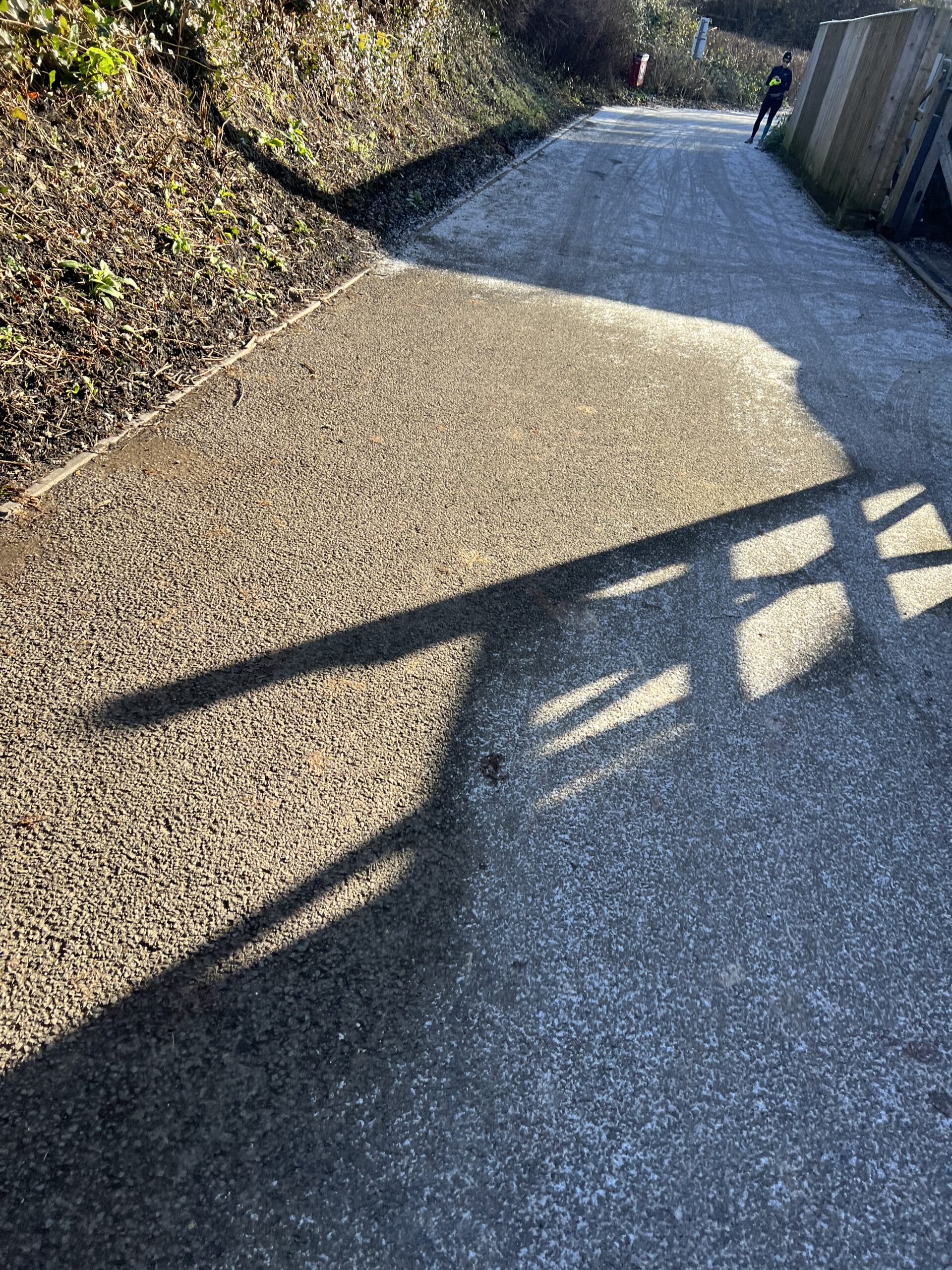
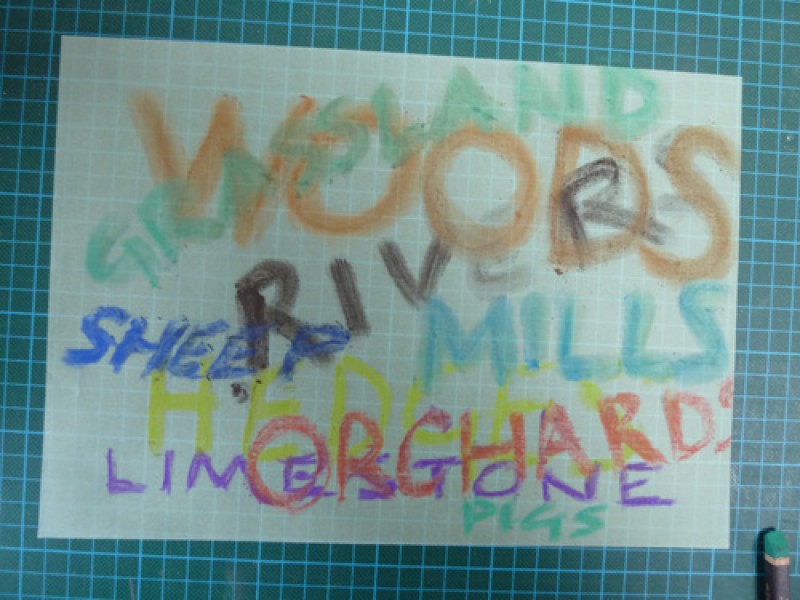
My choice of site is the “NortonWood” also known as the “Jolly Foresters” Community Orchard, a restored orchard on an east facing slope, beneath a beech wood, overlooking the Nailsworth Valley and surrounded on three sides by housing.
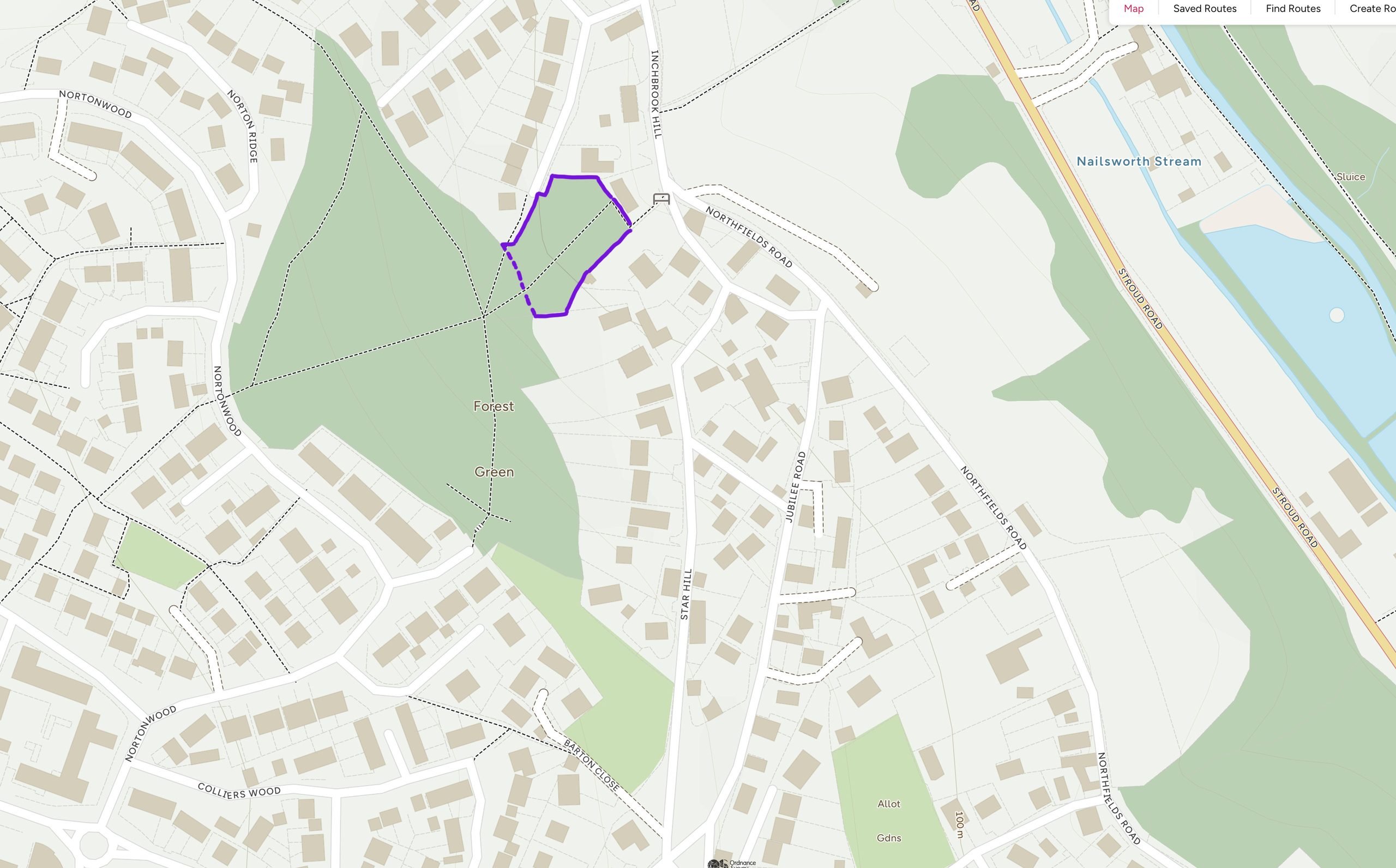
Location of Norton Wood and the community orchard. The community orchard is a partnership with the Town Council who own the site. The orchard had been a part of a cottage garden and came into public ownership when it and the nearby “Jolly Foresters” pub and its car park were sold. A group formed to restore the orchard by planting Gloucestershire fruit tree varieties.
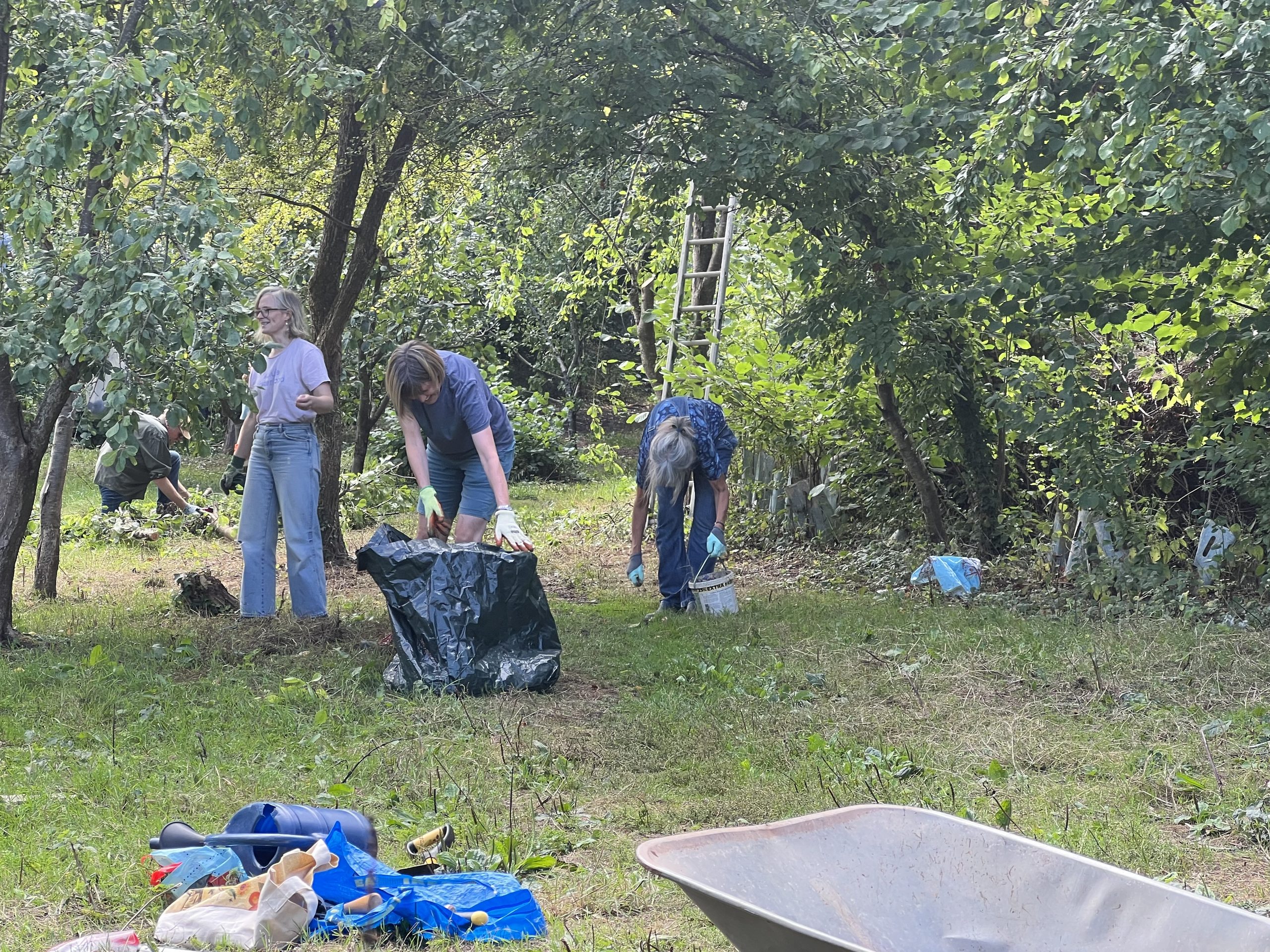
Working the land as deep encounter.
Whereas previous generations worked the land, many of us have lost this contact. This includes loosing contact with growing and harvesting food, seasonal cycles, local traditions, recipes and neighbours. However, it has also meant living without the uncertainty of a harvest and a livelihood dependent on weather, without hours of back breaking work in the mud and the high levels of depression suffered by many farmers today.
I used to walk there regularly with our dogs Nell and Maggie and have for a number of years been a member of the group looking after the orchard. My deep mapping explores my relationship with the other than human and my activities as a part of a community of place.
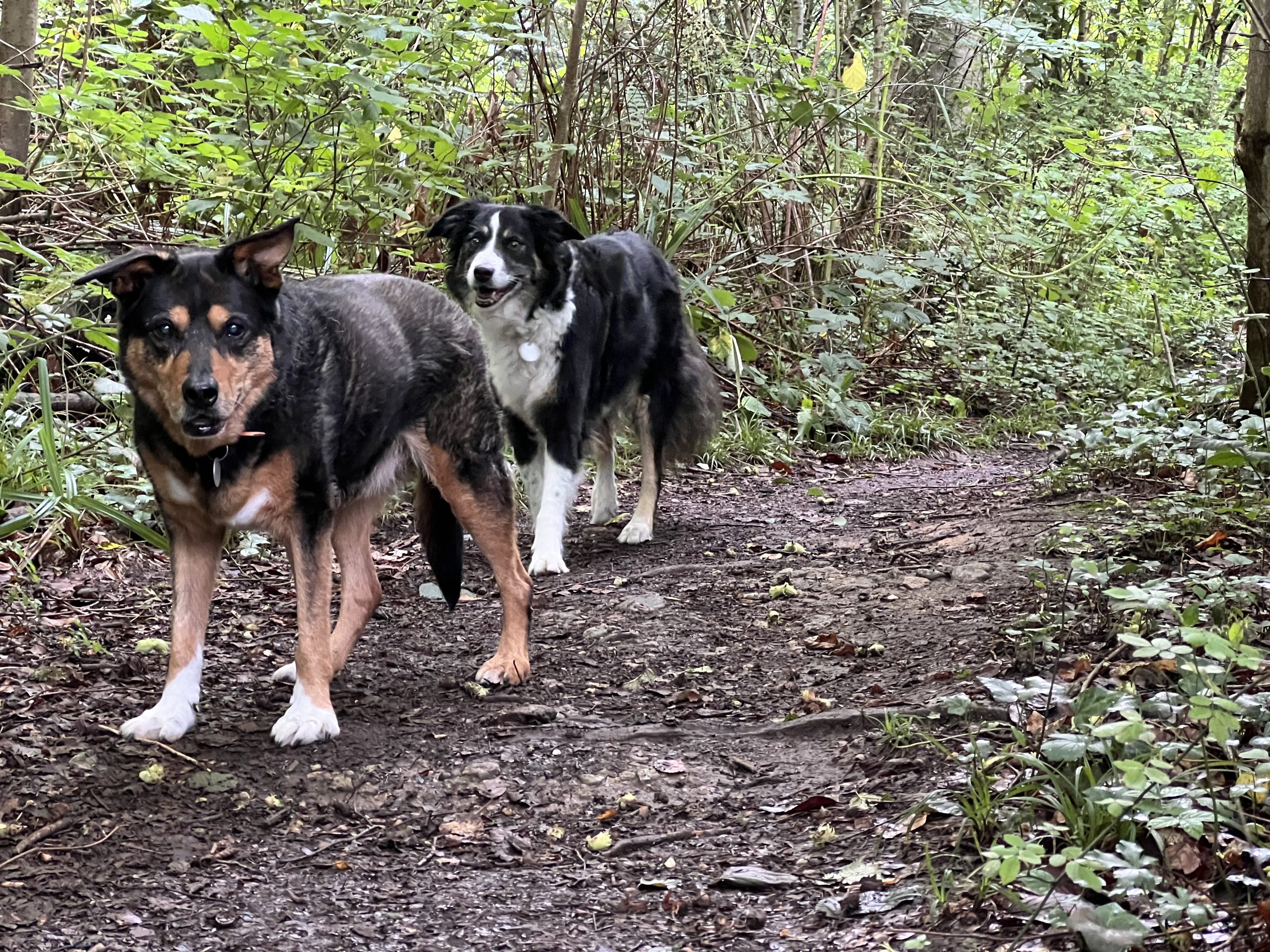
Nell and Maggie were always ready for a walk through the orchard and up into the woods. They are no longer alive and I miss them, being a part of their pack. Amongst other things they helped me imagine living in earlier millennia; nothing but rain, sun, storms, woodland, deer, boar, bird song – human and dog, They helped me to understand being in place as sharing moments in time and yet timelessly, always playfully! Yes, a romantic vision of life in the valleys but a rejuvenating daily experience.
Our project was guided initially by the following references as stated on the Walking the Land website https://walkingtheland.org.uk/:
“We see this (Deep Encounters) as an exercise in deep mapping; an intensive look at a particular place that might include geography, history, and ecology. Some call the approach ‘vertical travel writing’, while archaeologist Michael Shanks compares it to the eclectic approaches of 18th- early 19th century antiquarian topographers, or the psycho-geographic excursions of the early Situationists.
‘…..Places are not stable; they mean different things to different people – even different things at different times. The deep map recognises the slippery identity of place, and seeks to visualise the multiple identities that go towards constructing the human experience of place’. https://wp.lancs.ac.uk/lakesdeepmap/the-project/gis-deep-mapping/
We increasingly need to work in “the curious space between wonder and thought” a space where….“there is no single Disciplinary (in an academic sense) voice” (geographers Stephan Harrison, Steve Pile, Nigel Thrift), …. the: “space–between representation and reality, language and life, category and experience” (feminist philosopher Geraldine Finn).. (see https://www.iainbiggs.co.uk/2014/10/deep-mapping-a-partial-view/)”
I was particularly interested in locating this “space–between representation and reality, language and life, category and experience”. To do this I chose to use What3Words and photography. This was initially to recognise that walking a line around a site can develop an sense of control over it, creating a definition of it, and I was looking to become more immersed to explore my relationship with it.
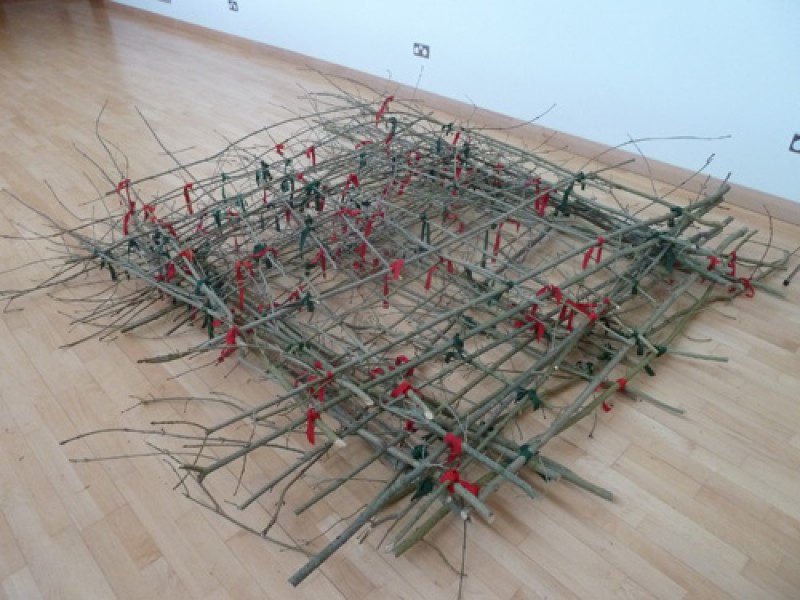
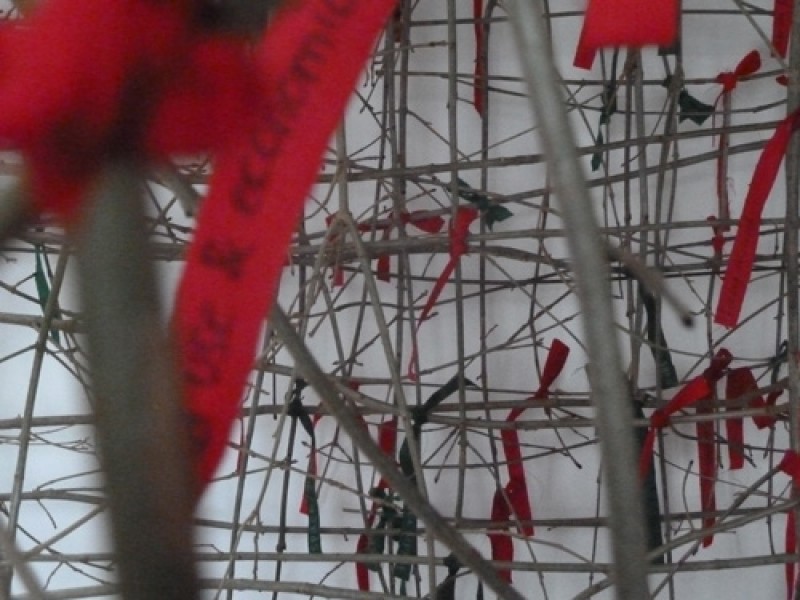
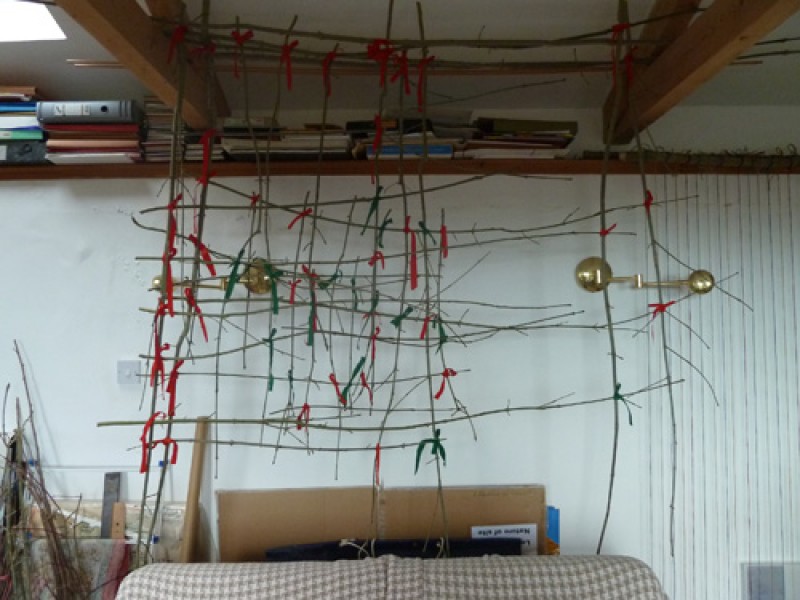
My first series of located photographs using What3Words were in response to Tim Ingold’s ideas about mesh and grid.
In conversation with Henrike Neuhaus and Désiree Coral (https://www.artscabinet.org/encounters-issue-1/a-conversation-with-tim-ingold)… Ingold criticises Deleuze’s use of these terms, saying:
“If you are familiar with Deleuze’s idea of striated space, the problem with that notion is that it mixes these two things up. It fails to distinguish between the grid and the mesh. One kind of striation is when you’re a cartographer and you draw a grid. You lay out the grid and you locate all the objects you’re surveying on a particular location in the grid. That’s a way of measuring things up with standard units. But if you’re a weaver or a farmer ploughing your field that’s quite different. Because then you’re laying down the lines in a movement that is very haptic, that involves immediate bodily engagement with materials. It’s not the same as imposing an abstract grid upon the materiality of the earth.”
My own methodology in using What3Words is to play with ideas of locating specific responses to located places, to purposely examine the relationships between an ‘overlaid, abstract grid’ and an ‘attached, felt meshwork’. It could be seen as humanising the grid or more-than-humanising the grid. I’ve dozens of these, Here is one example.
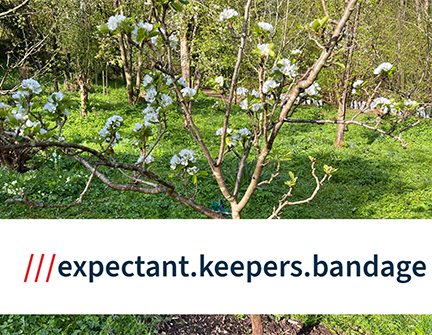
Spring! We’re expectant
no bandage, just gardening
we’re orchard keepers.
As I walk in the orchard with the idea of mesh rather than grid, I come to understand this as a centuries long dichotomy and wonder if they are mutually exclusive.
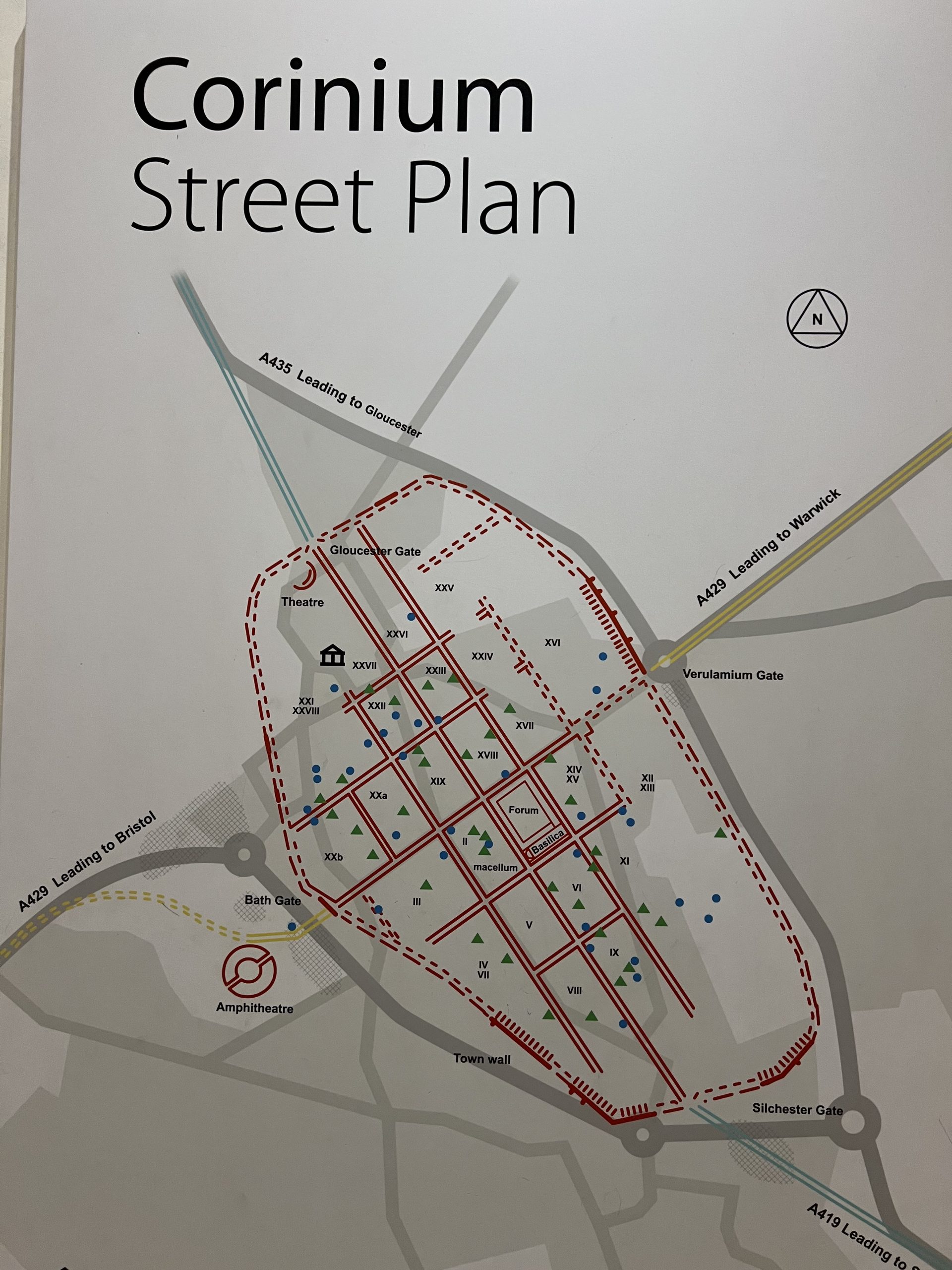
The roman layout for the nearby town of what’s now Cirencester is the way we organise the spatial layout of towns a constant balance between our need for order – the grid, and our desire to engage with place in a less rational, more emotional way – the mesh. This town plan isn’t that dissimilar from Los Angeles or Milton Keynes.(Street Plan from the Corinium Museum, Cirencester)
I wonder how much this question underlies my earlier practice as a landscape architect whereby the inclusion of planting, sensitivity to landscape and access to nature is a way of bridging that dichotomy. And I suggest that its a tension within us, a dependancy on order, structure and routine and a need for disorder, improvisation and a taste of chaos.
Rather than following theories from psychology and neuroscience about control and loss of control, instead the psychology around ‘Nature Connectedness’ as set out in the Journal of Environmental Psychology,Volume 24, Issue 4, December 2004, Pages 503-515 is a useful reference. In the article by F. Stephan Mayer and Cynthia McPherson Frantz.they write about “The connectedness to nature scale: A measure of individuals’ feeling in community with nature”. These relational aethetics seem to be central to Deep Encounters and a way of further exploring the relationship between grid and mesh…and line.
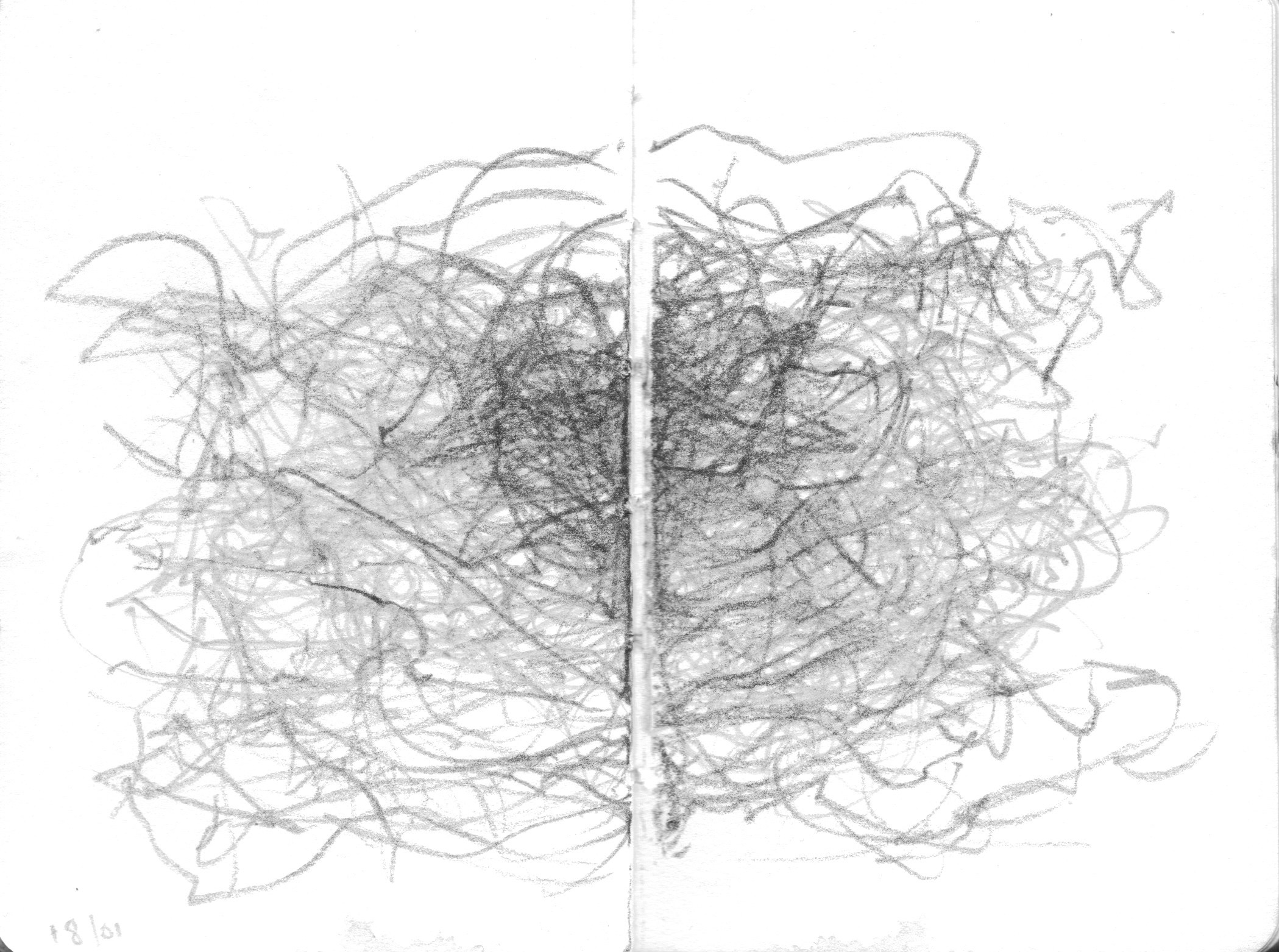
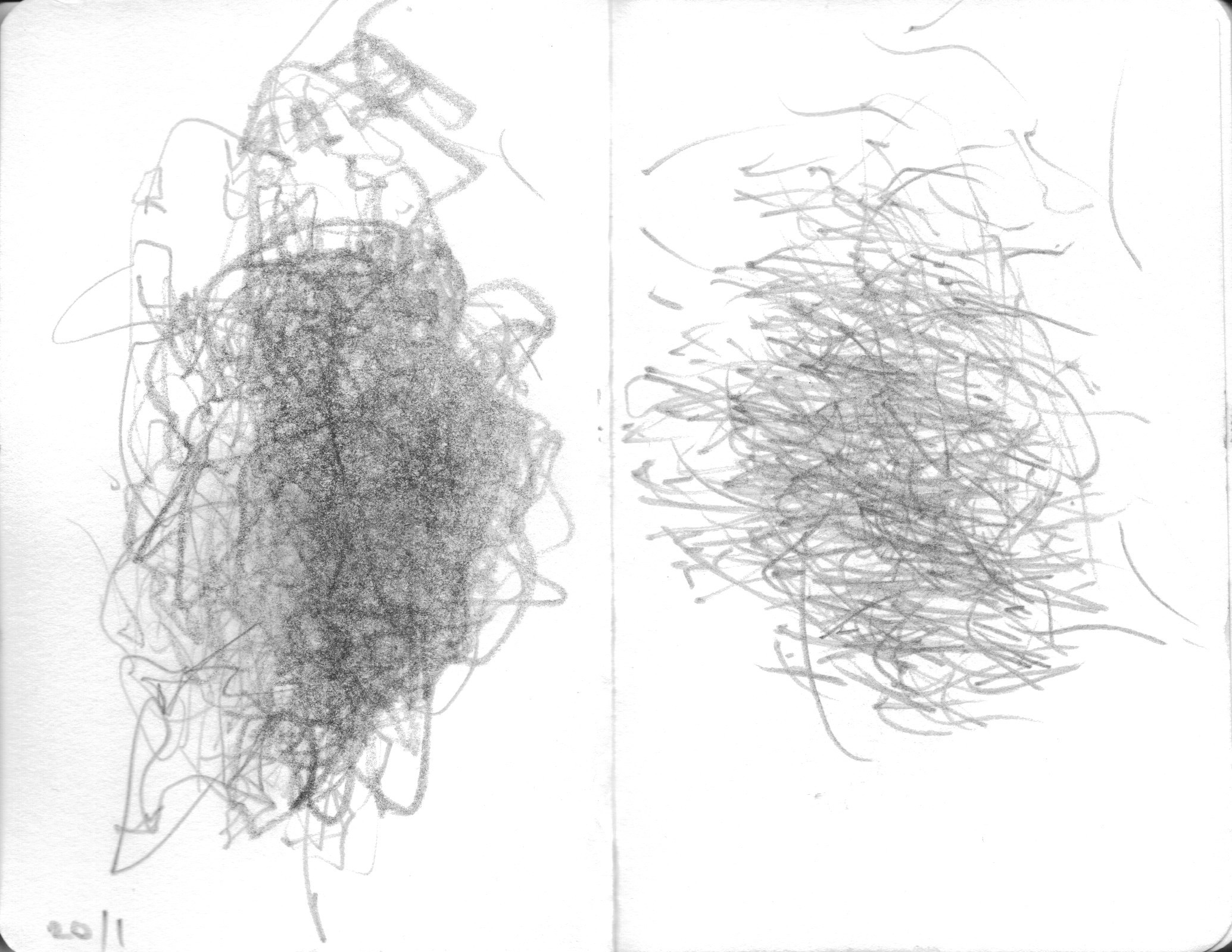
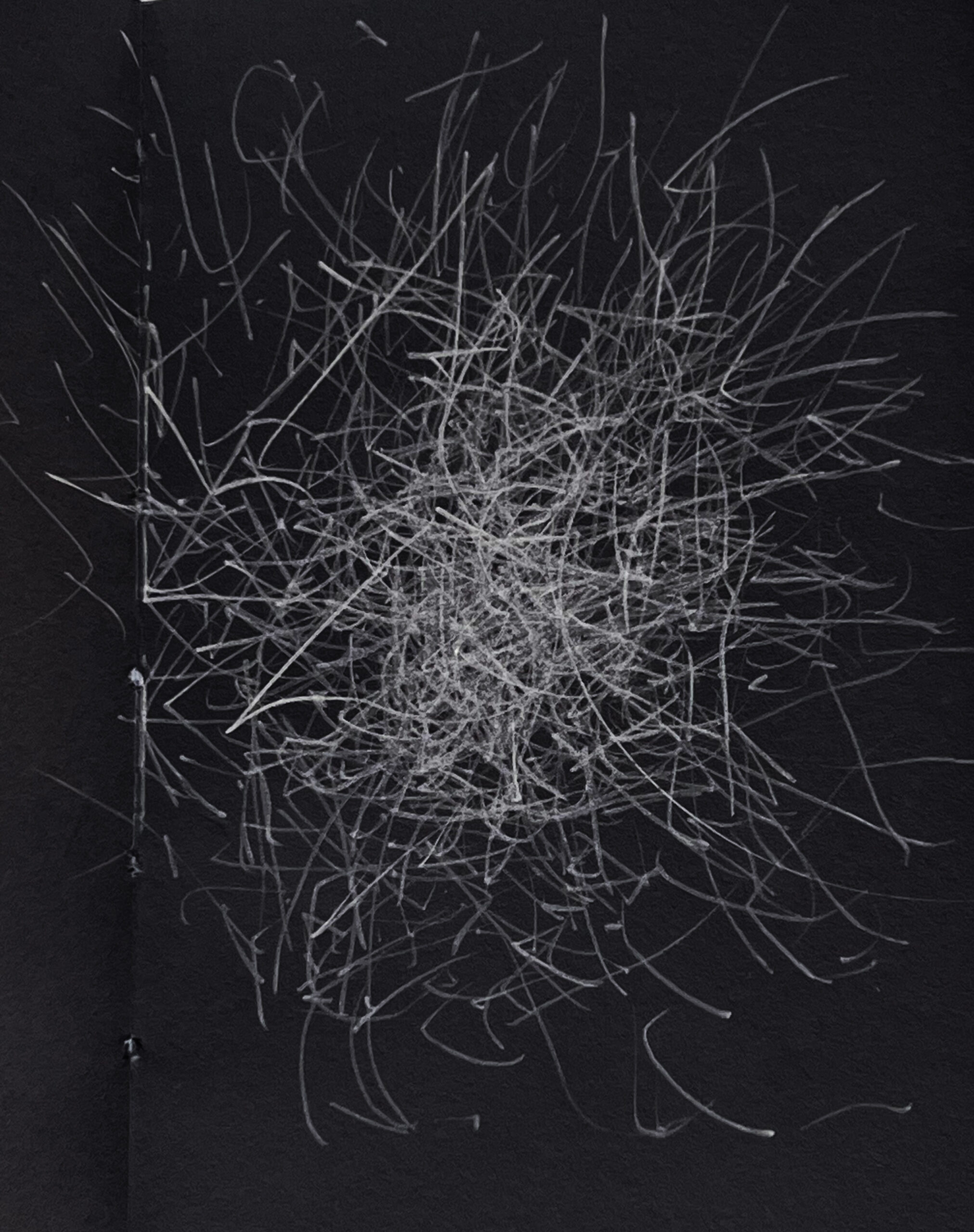
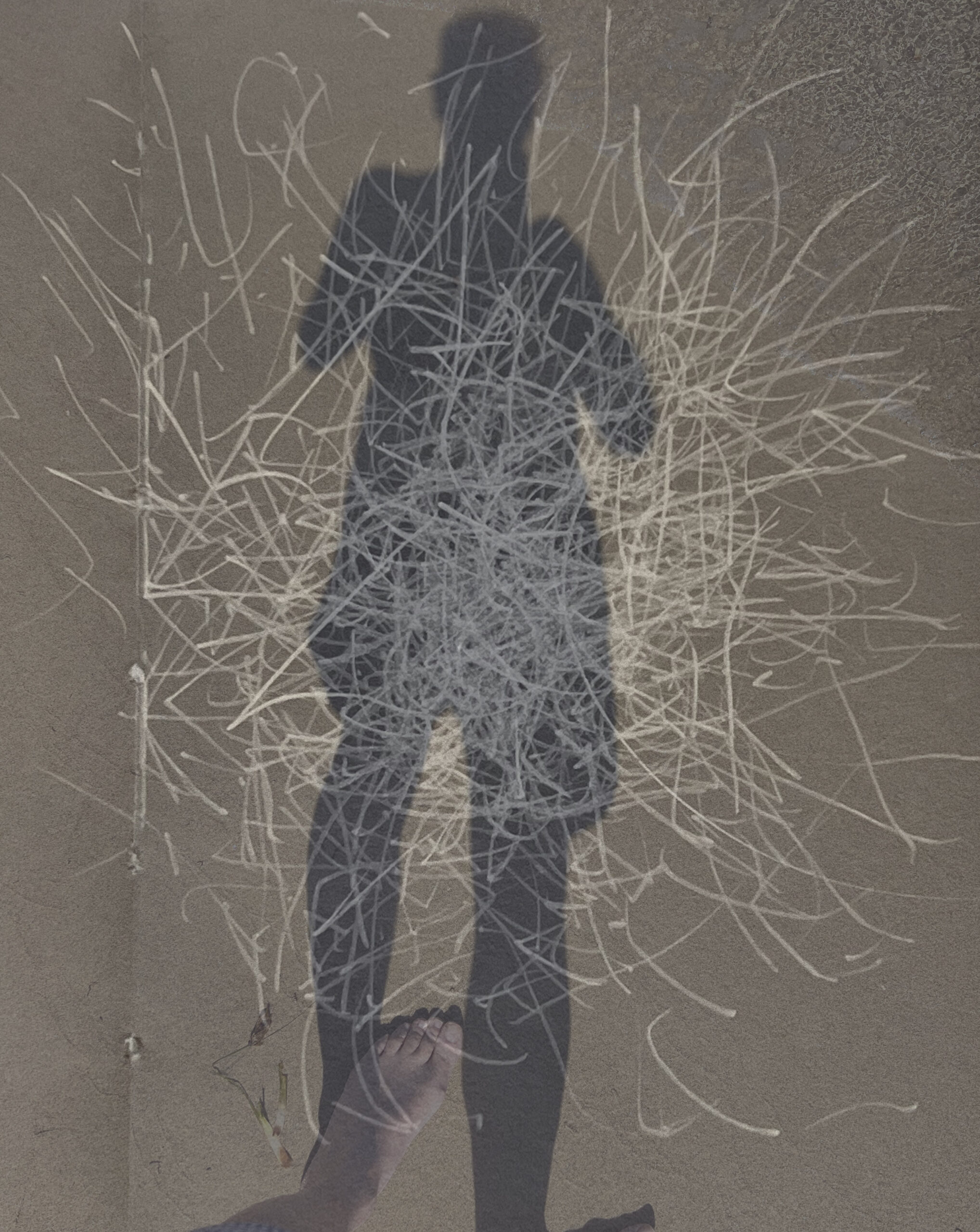
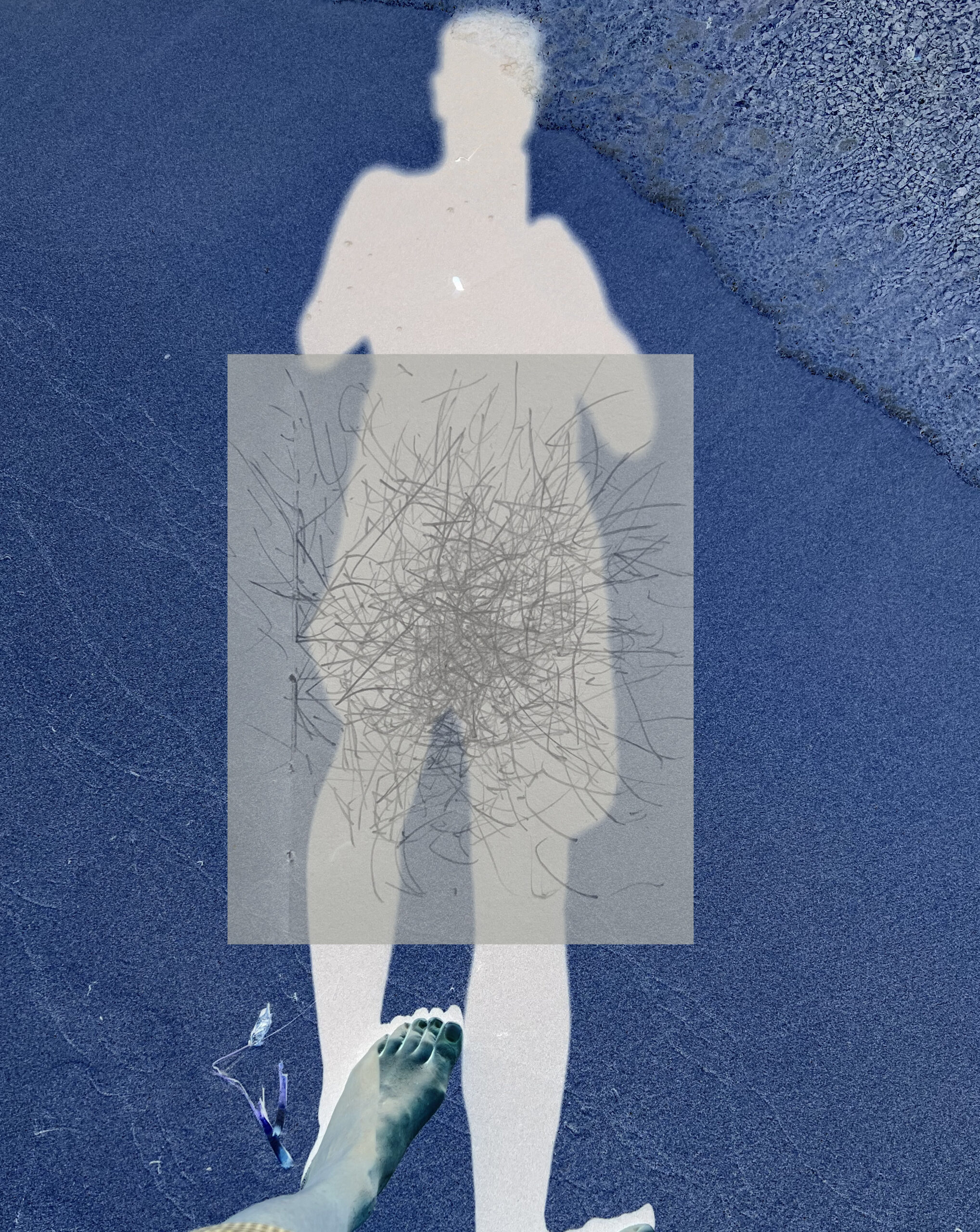
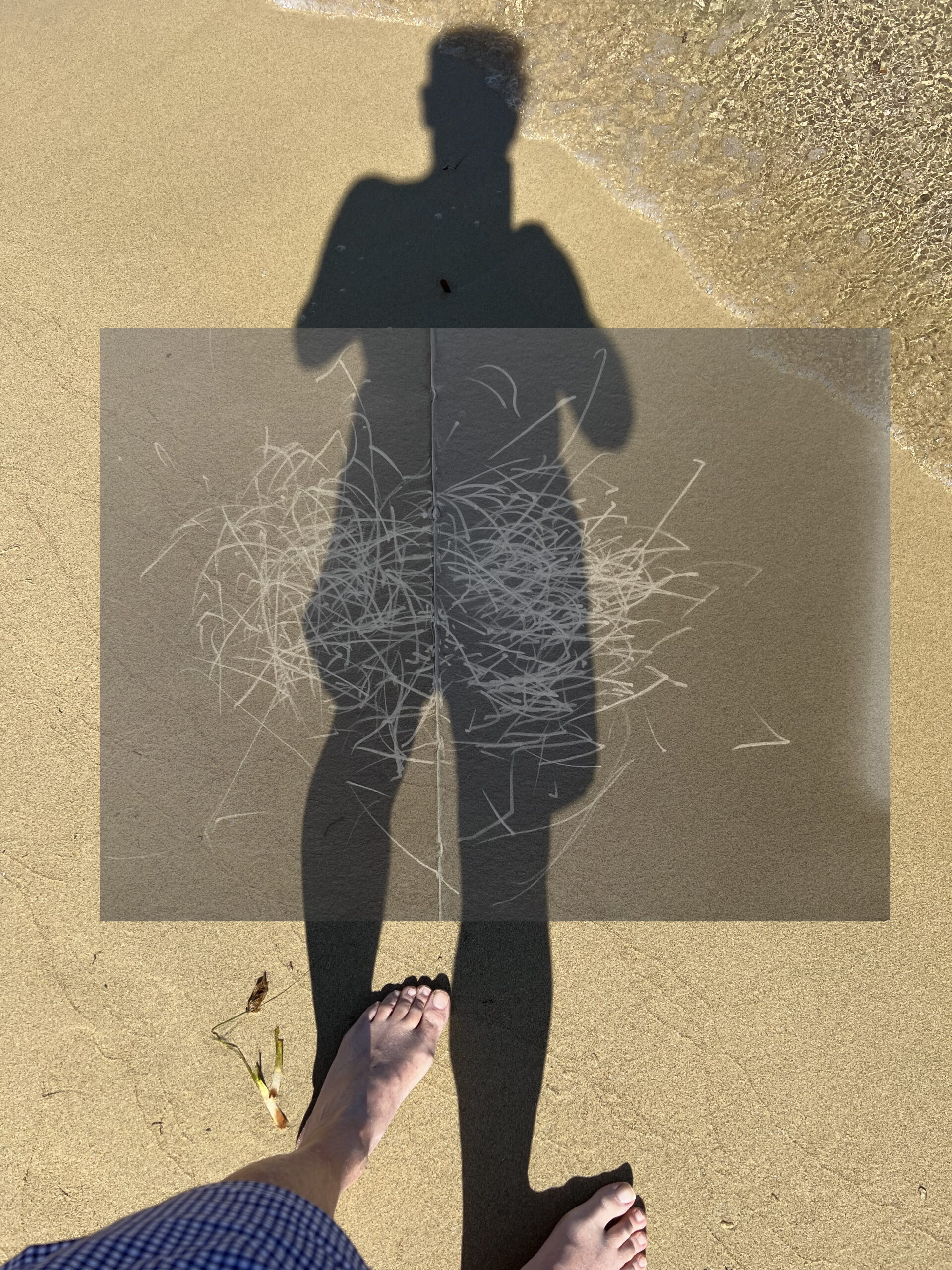
Yes, line. My second series of explorations used line to locate me in Finn’s “space–between representation and reality, language and life, category and experience” with a focus on time.
March to June 2026.
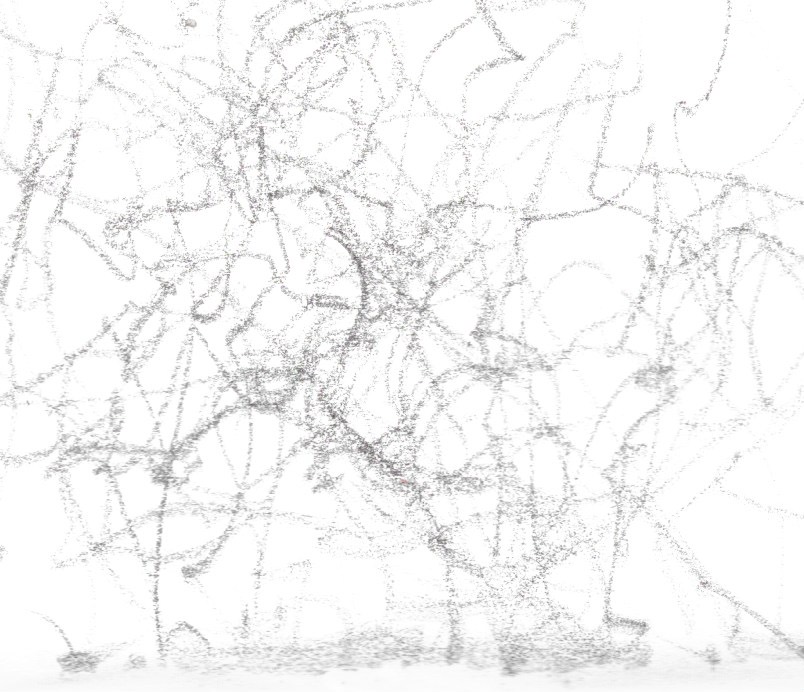
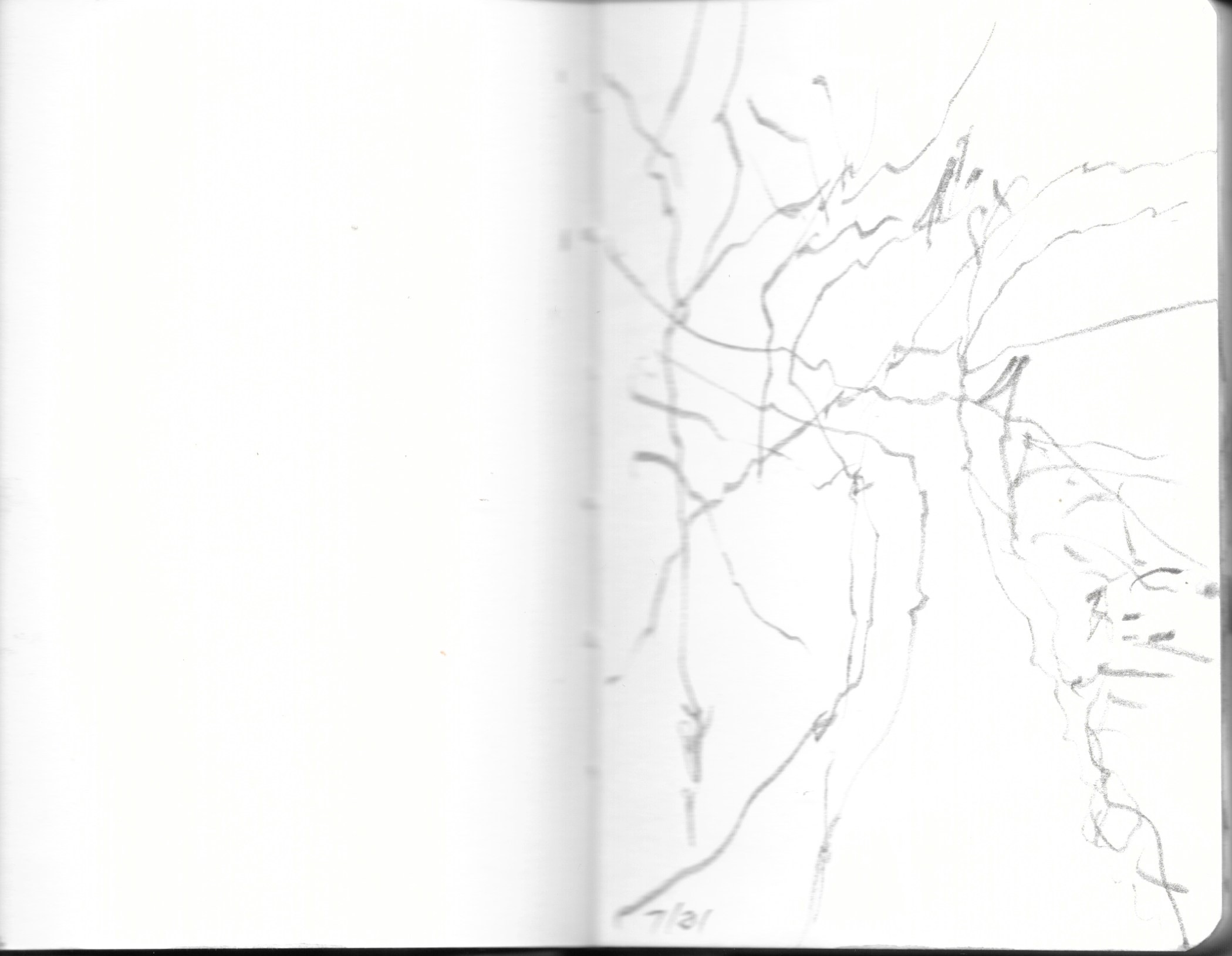
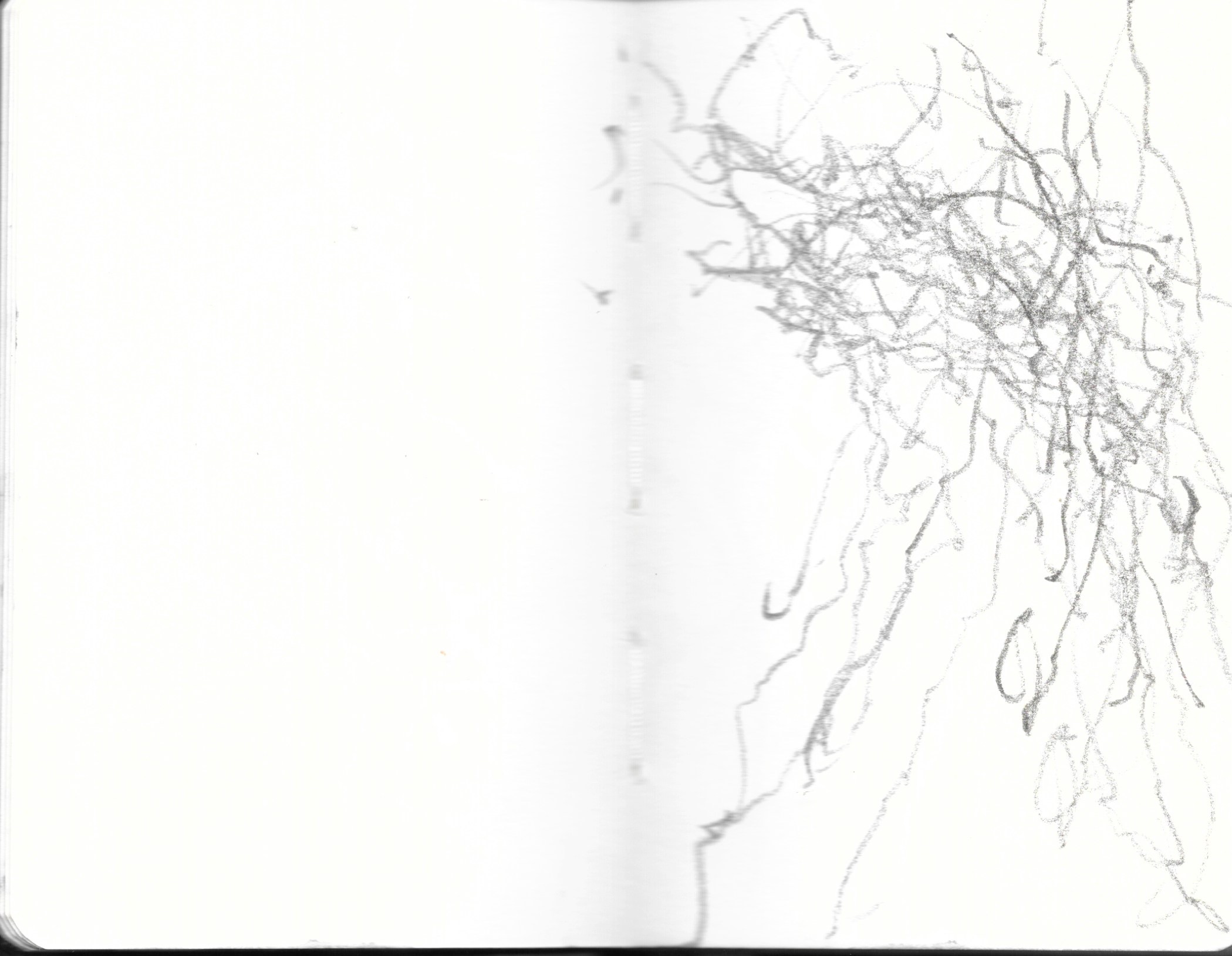
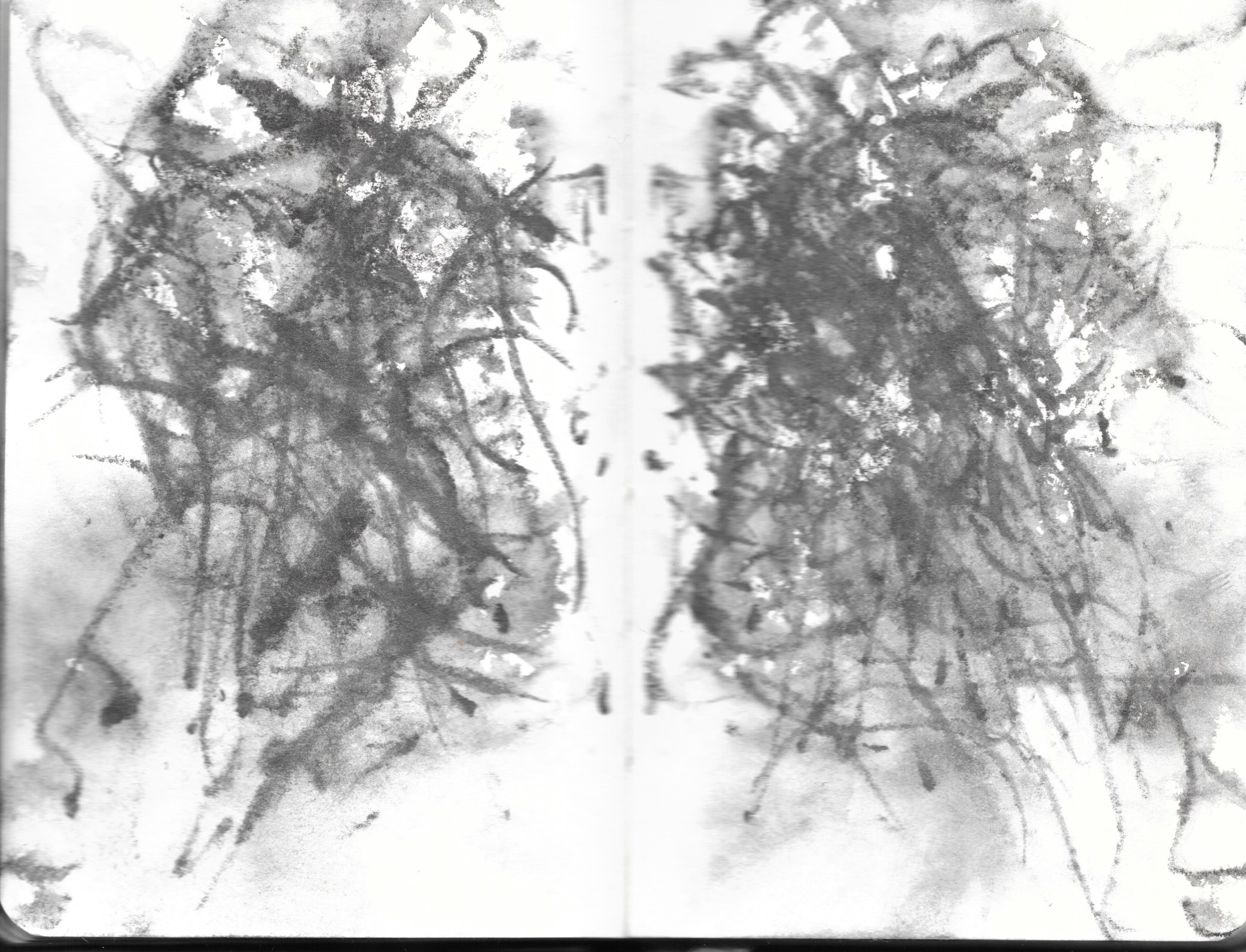
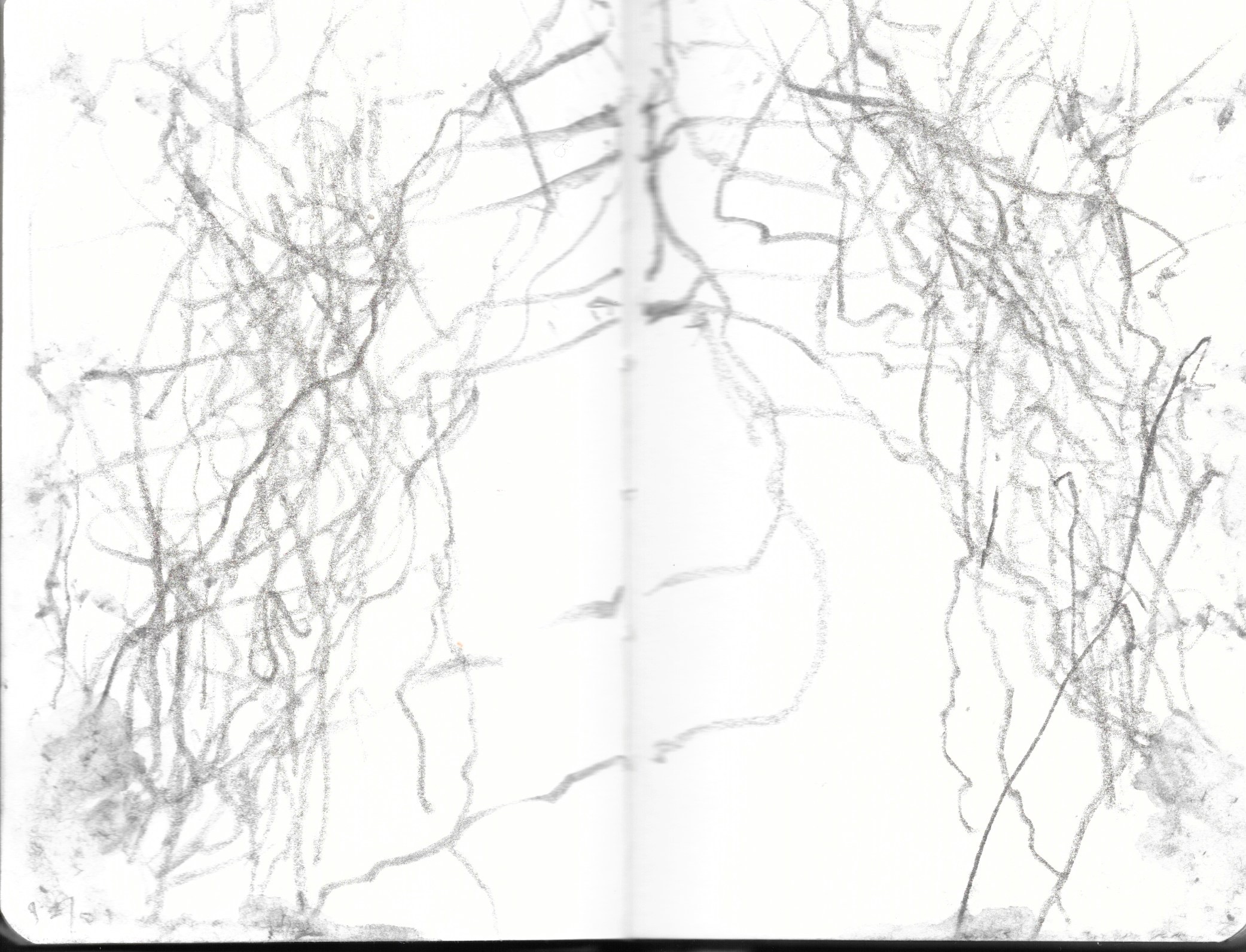
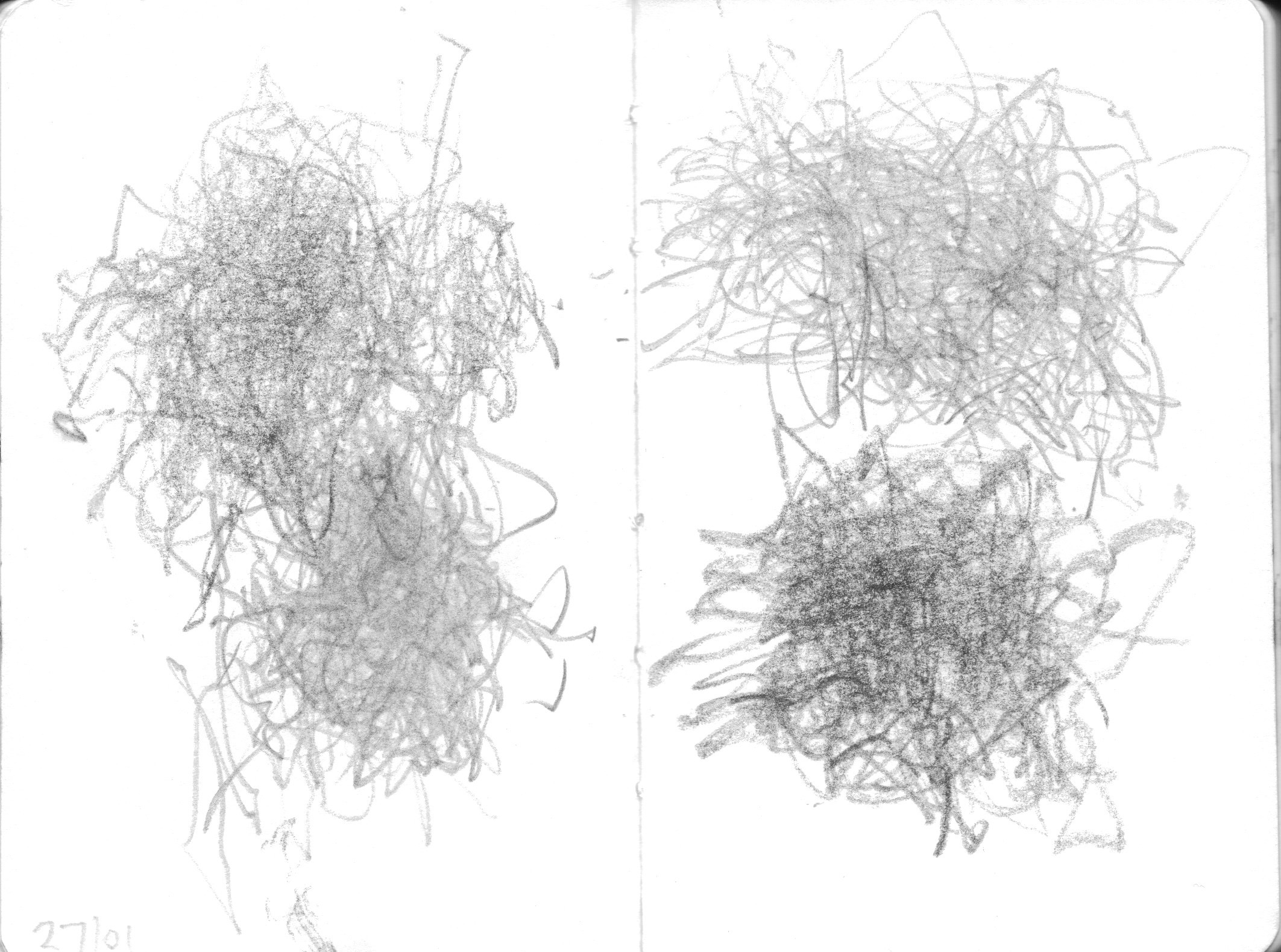
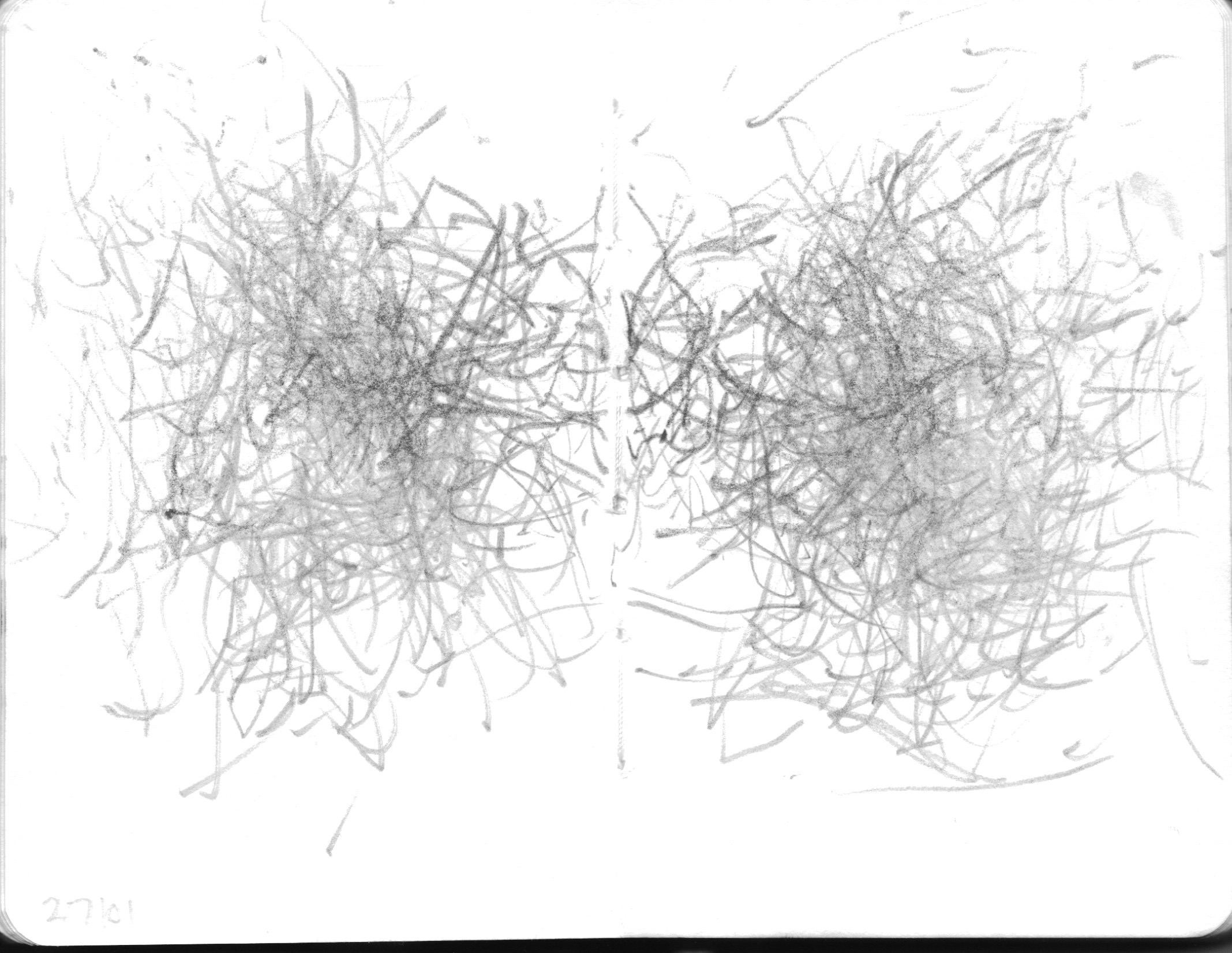
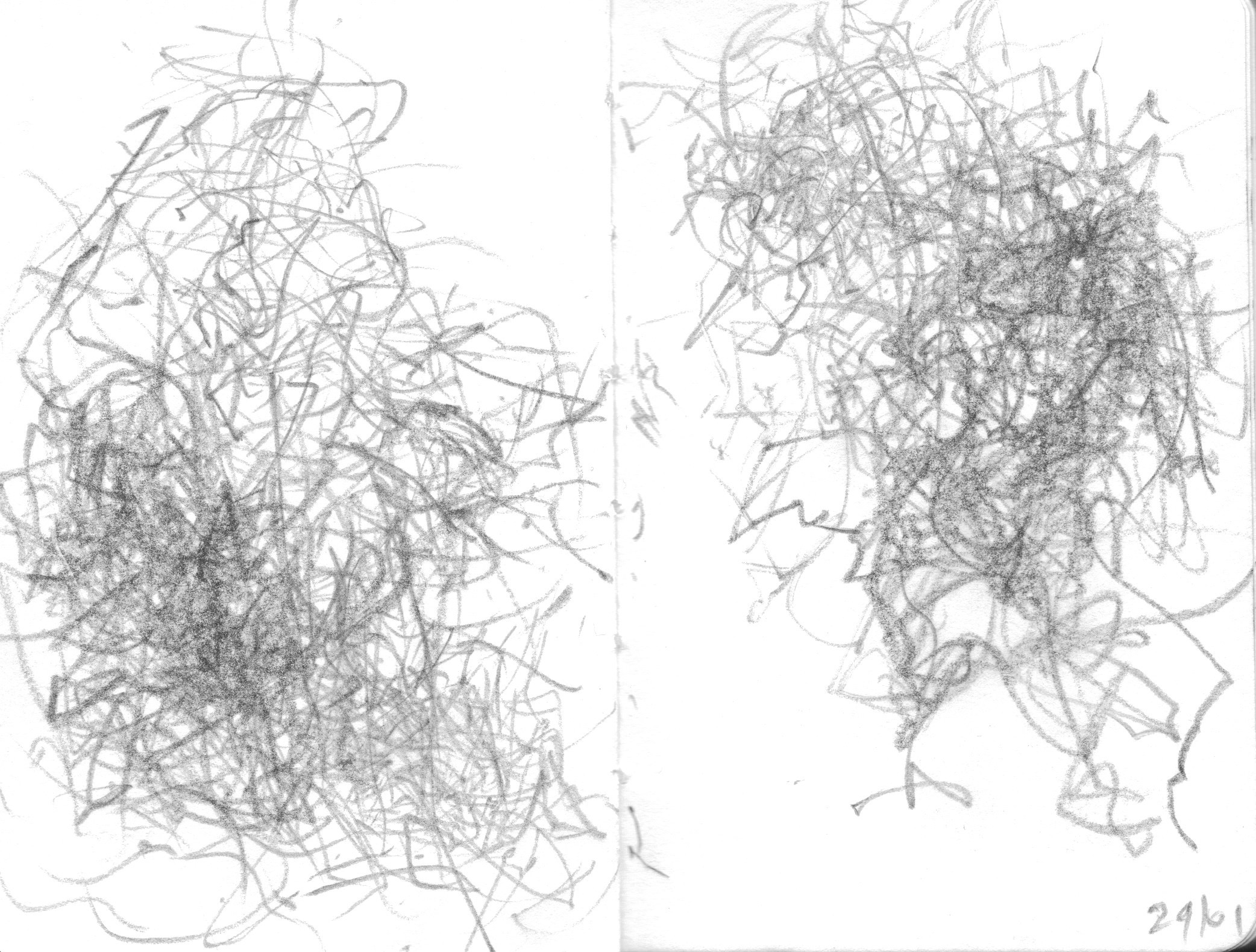
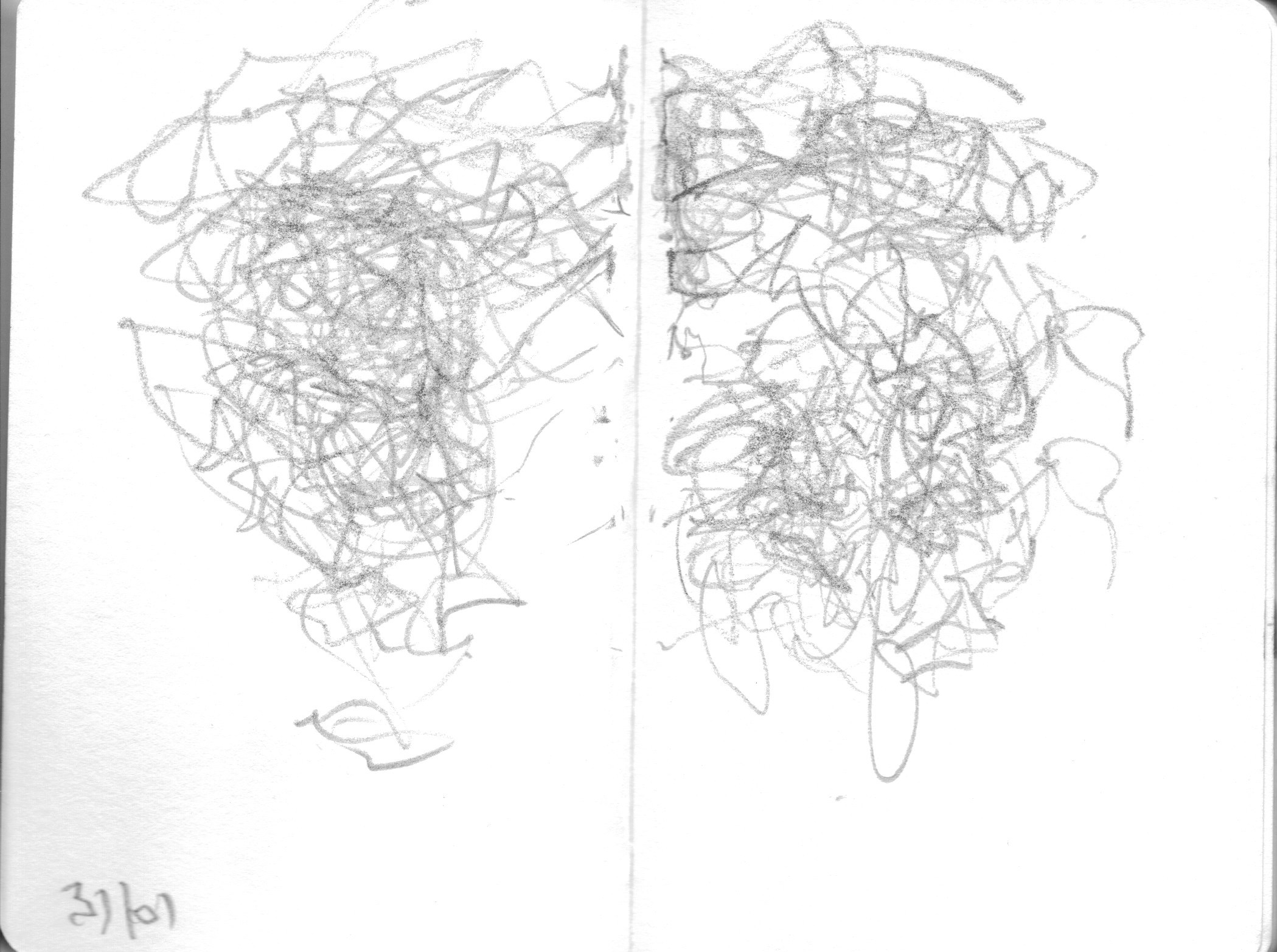
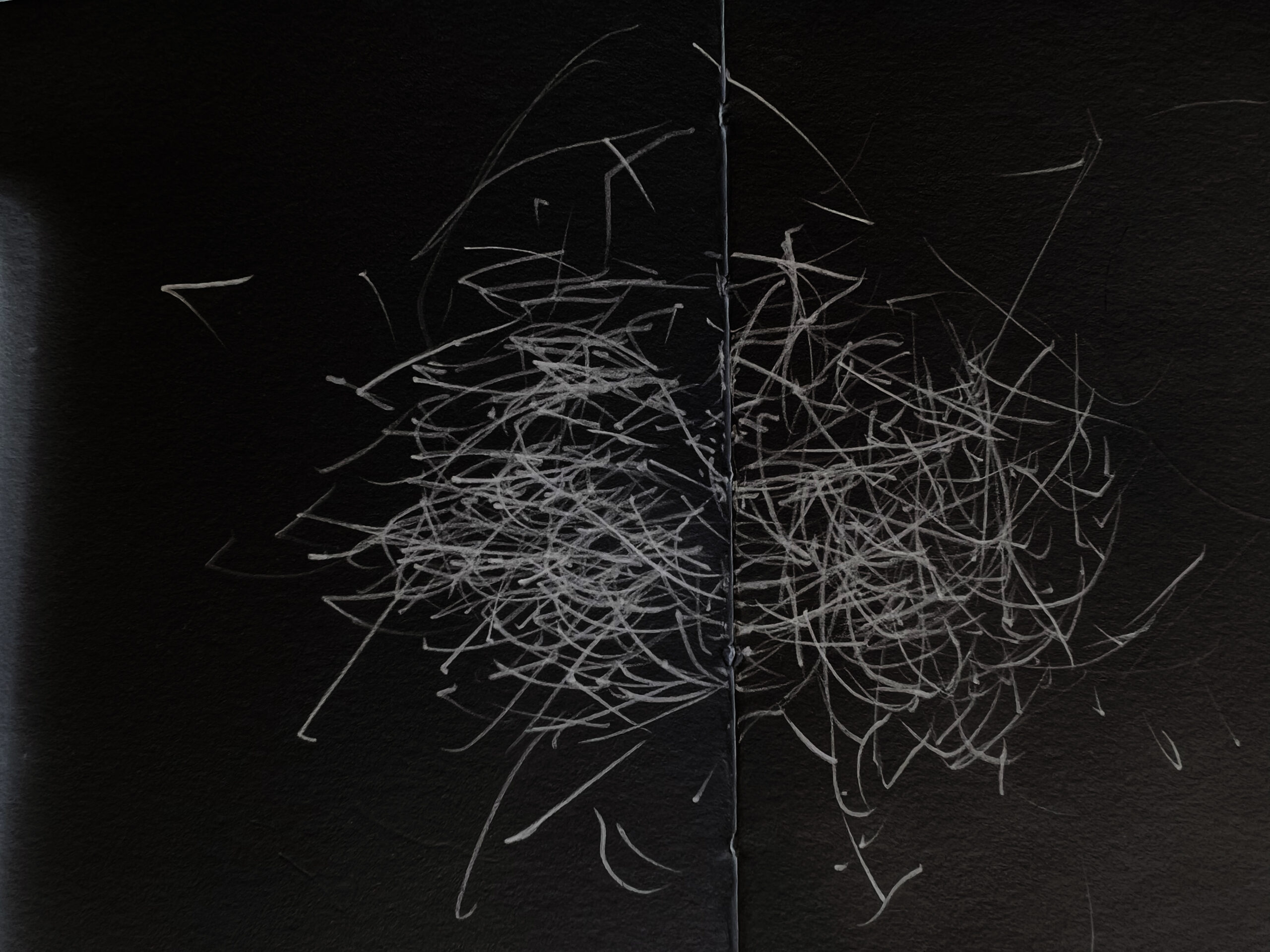
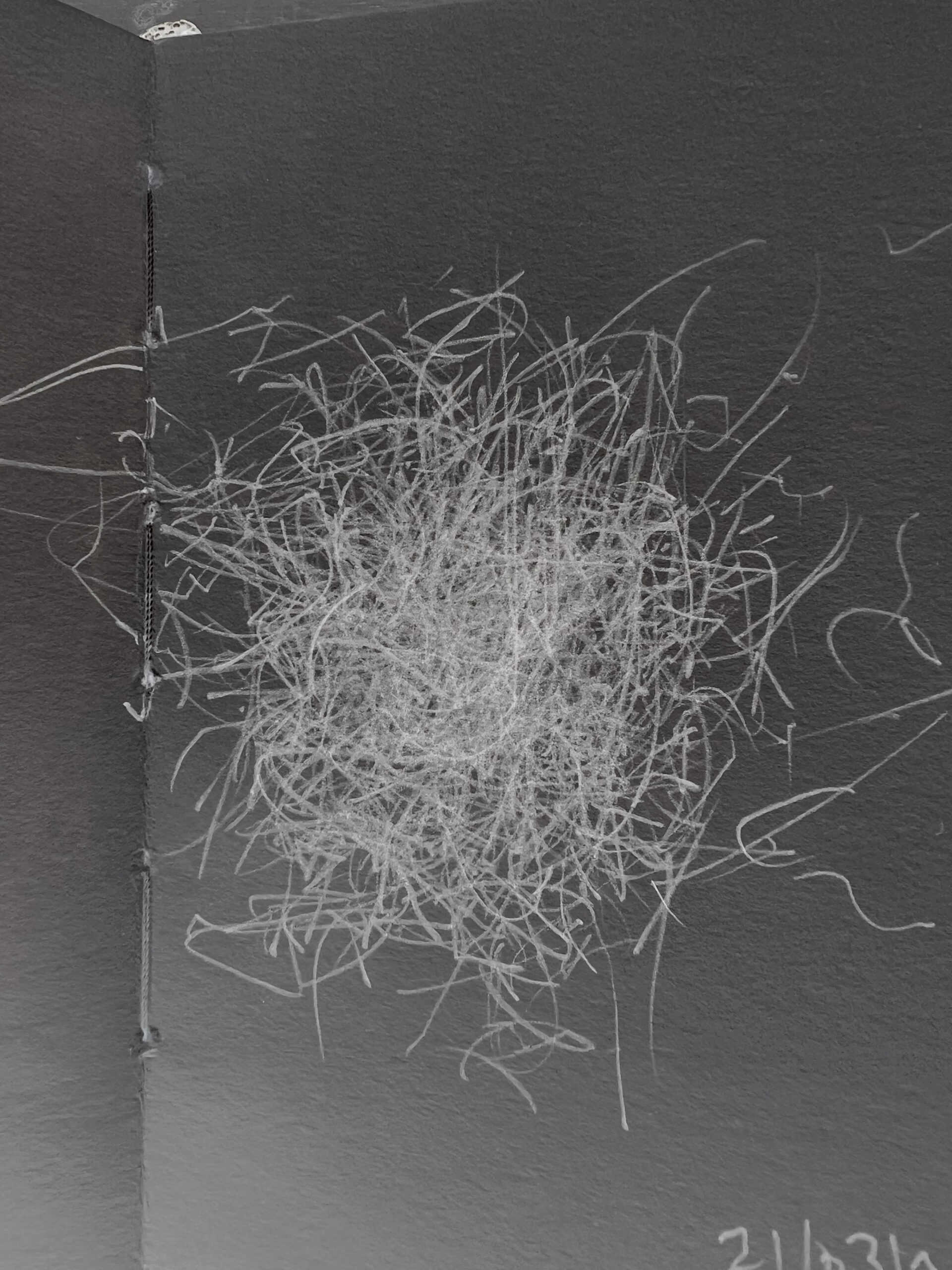
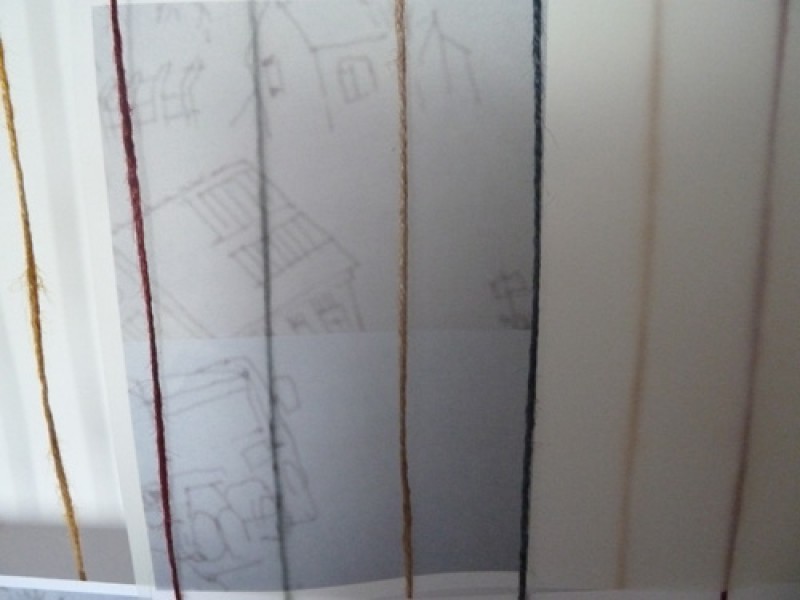
I returned to the same three fruit trees from time to time and each time drew them from the same three places. I thought of these as a coming together of botanical illustration and durational drawing. What they become is a later stage in the process.
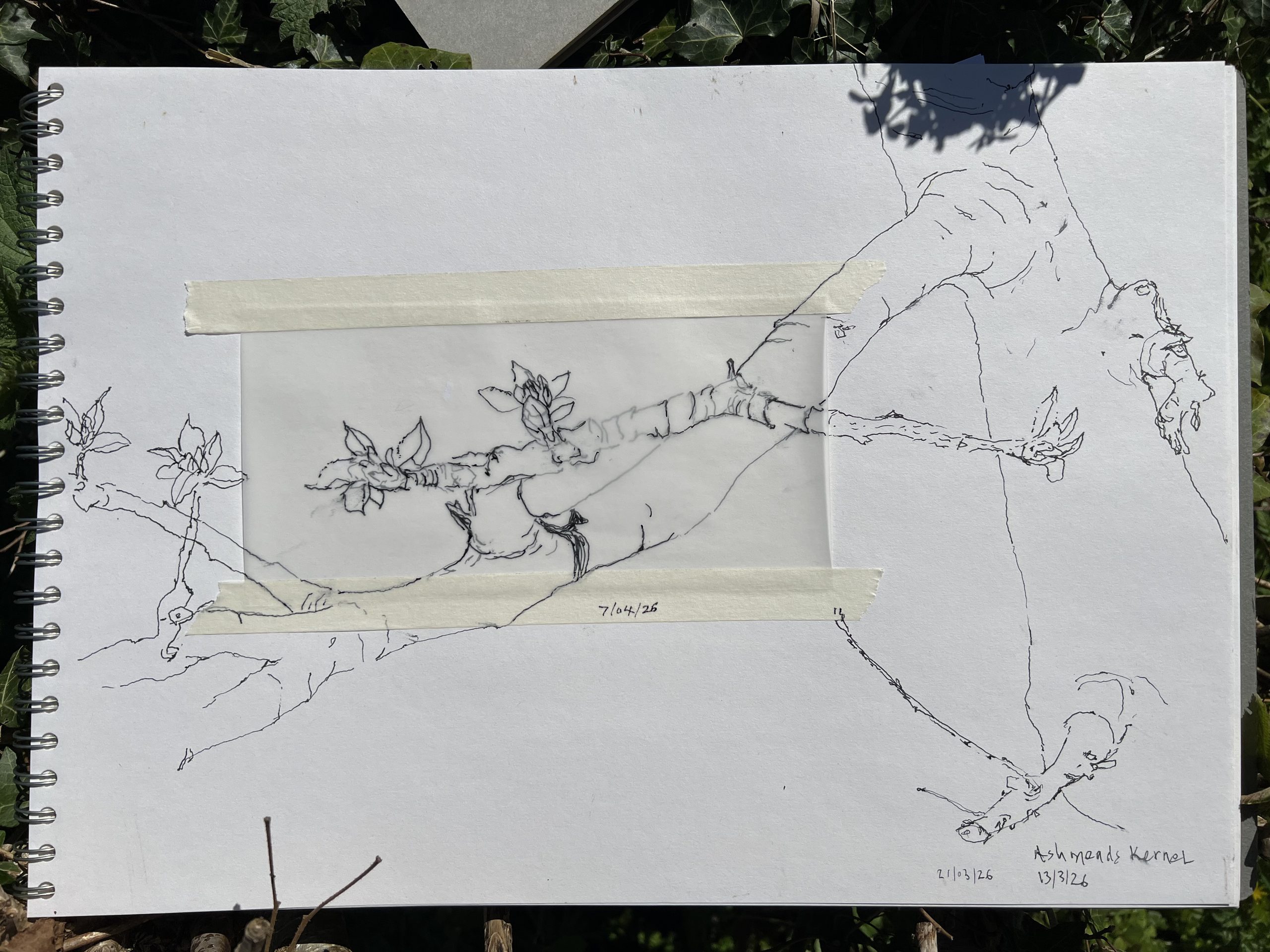
“Ashmead’s Kernel is one of the oldest apple varieties in the UK dating back to around 1700. It has to be said that this variety does have its own particular problems and the most obvious one is that it looks boring! The dull slightly brown and well-russeted skin has none of the appeal of a modern red flushed apple. It is however well worth growing this variety, it will certainly win admiration from fellow gardeners.” https://gardenfocused.co.uk/fruitarticles/apples/variety-ashmeads-kernel.php
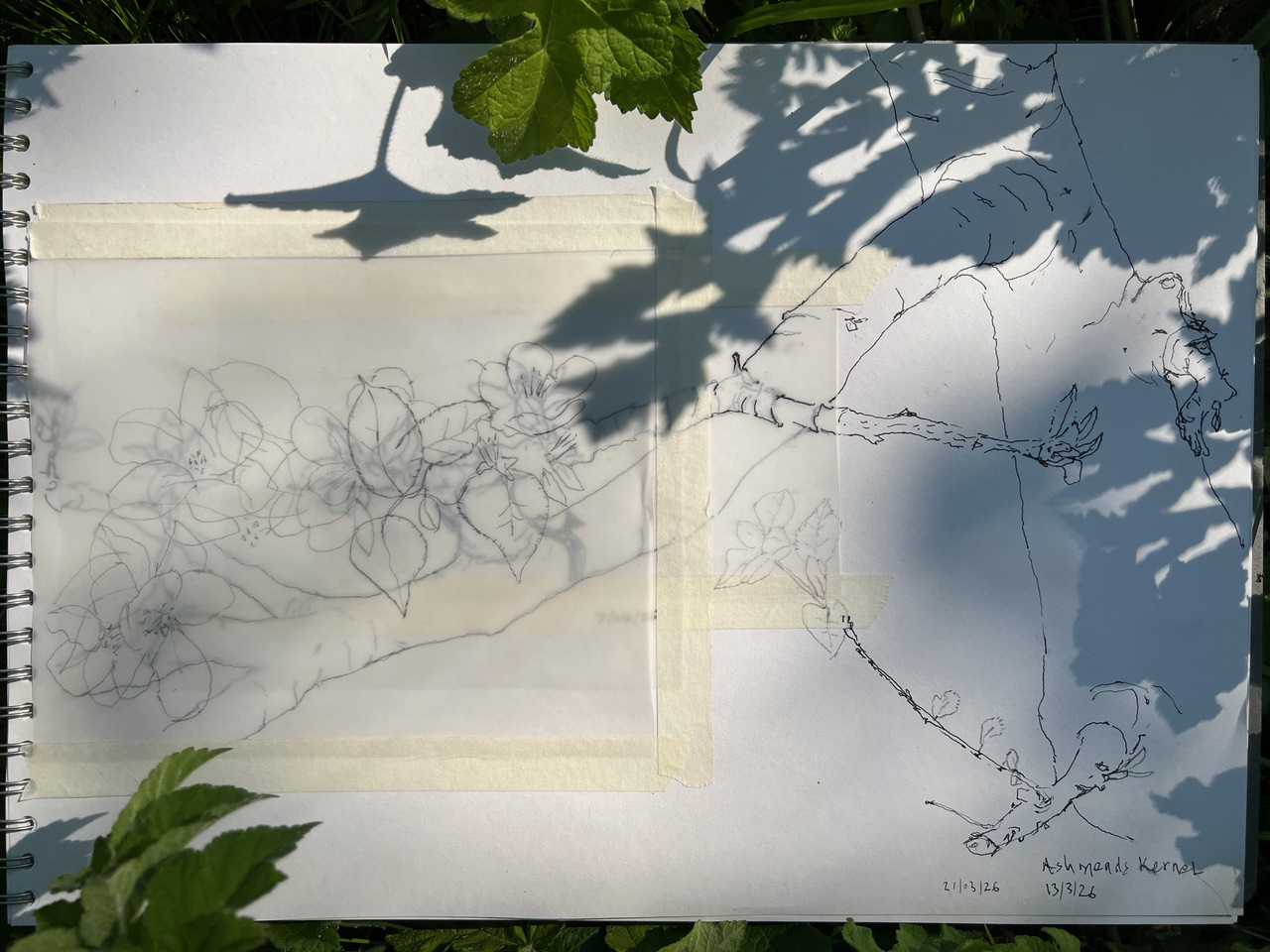
And the website https://www.orangepippin.com/ is even less flattering about its appearance: “The appearance is, let’s be honest, not especially attractive. Ashmeads Kernel is lumpy, mis-shapen, and rather small. The underlying bright green skin is entirely covered in russet. Russet can be very appealing- think of the dull golden glow of Egremont Russet for example – but somehow on Ashmead’s Kernel it just looks plain dull.”
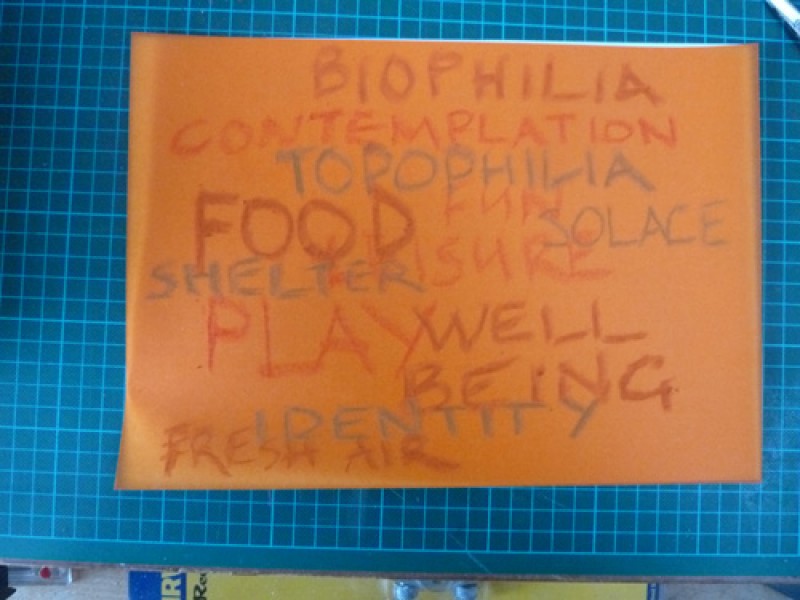
When I searched for the Ashmeade’s Kernel on the website I hadn’t expected to stumble on this sort of ‘apple beauty parade’! And although it has a funny side, it makes me think about beauty, food and trees. OK the websites go on to say that “The fact that it has survived over 300 years is down to its flavour. Unique and top quality is the only way to describe it.” While these fruiting features and appearance are legitimate ways of judging apple trees, there are many more held by members of the orhaard group; Daniel loves climbing into them, as does Rebekah. And there is the blossom, its colour and scent.
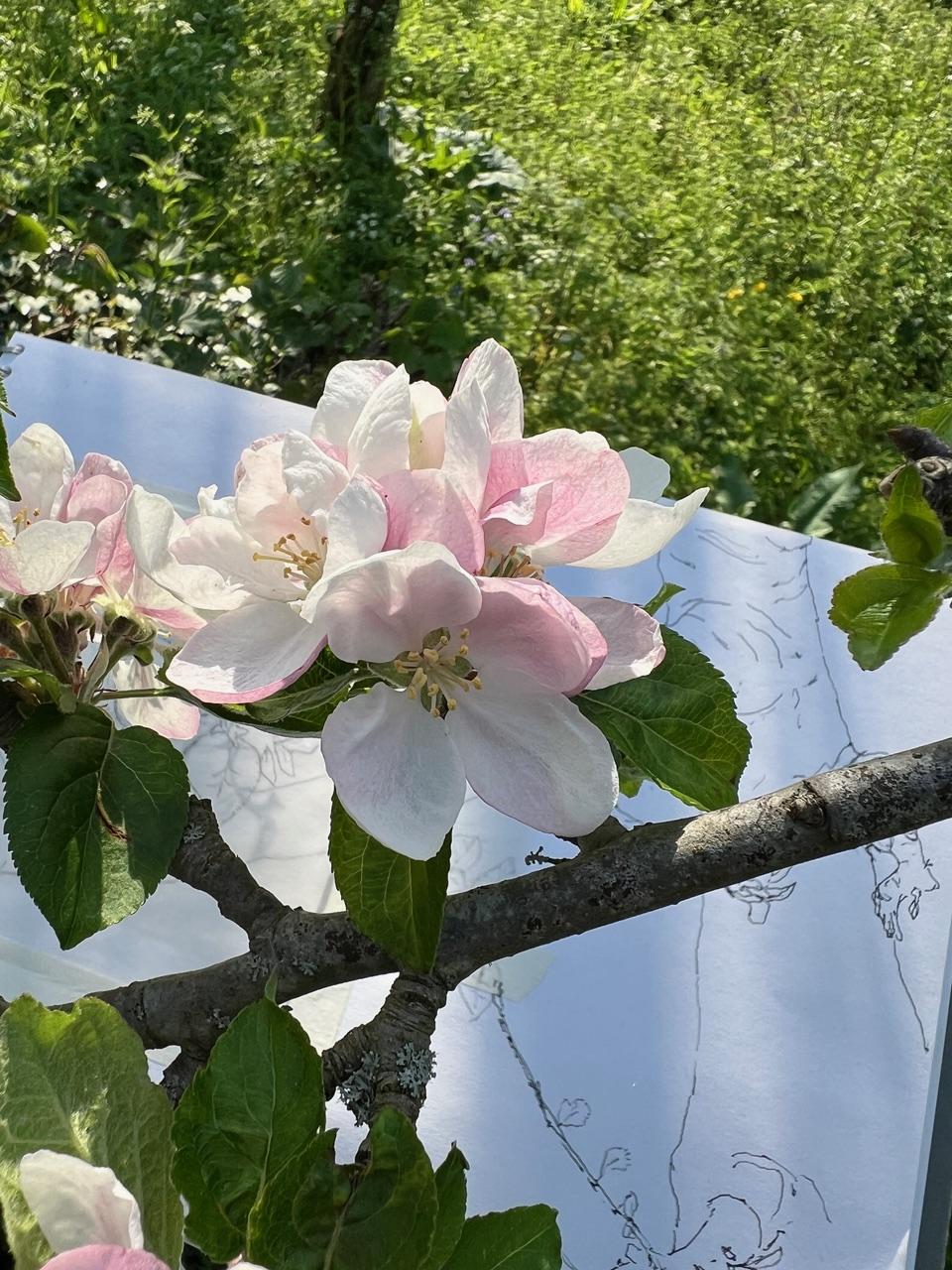
In his 1790 work, “The Critique of the Power of Judgment”, Immanuel Kant has sparked many debates about “Beauty”. His idea of “Disinterestedness” as a means of judging beauty has initiated a dichotomy between subjectivity and objectivity.
A feminist criticism of disinterest is that it replicates disengagement and the resultant objectification. Malcolm Miles takes this further writing: “Seeing the world as mere object implies its exploitation: seeing it, or feeling it, it as a mirror of the self, which is more or less an ecological position, may imply a sense of caring and living in relation to rather than exerting power over worlds”.
Helpfully Miles (2014) also claims “Beauty is a construct, not a natural property” and continues with the possibility of multiple worlds, “as many as beholders, each as real to the person seeing or imagining it – structured by constructs such as beauty”. This certainly chimes with the idea inherent in Deep Encounters quoted above and repeated here: ‘The deep map recognises the slippery identity of place, and seeks to visualise the multiple identities that go towards constructing the human experience of place’. And maybe suggesting multiple senses of beauty.